Friday, September 30, 2011

The Phantom Tollbooth - A Banned Book?

The Phantom Tollbooth

The Phantom Tollbooth
Norton Juster
Illustrated by Jules Feiffer

As I've mentioned before, things have been a bit stressful lately. I was seeking a comfort read, and I found one in The Phantom Tollbooth. When I first read this book, many years ago, I was utterly charmed and enthralled. I loved all the plays on words and the whimsical illustrations. None of these delights were diminished on my recent re-read.

The Phantom Tollbooth  is the story of Milo, a bored little boy who has no interest in the world around him. One day, after hurrying home from school, he discovers a mysterious package in his room. He reluctantly unwraps it, and discovers a “genuine Turnpike Tollbooth” in need of a bit of assembly. Since he has nothing better to do, Milo decides to construct the tollbooth and see what happens.

Milo and Tock meet the Which
What happens is an incredible romp into an adventure of learning and exploration in the kingdom of Wisdom. Wisdom is a strange type of place, where cars may run on thinking, or silence. Milo somehow is put on a quest to restore Rhyme and Reason (two twin sister princesses) to the kingdom. Without Rhyme and Reason, the kingdom has dissolved into a place of absurdity.

So why would a book that promotes learning and exploration be challenged or banned? I have no idea. I’ve seen The Phantom Tollbooth referred to as a banned book, but I can’t find any details about it. Does anyone have any details about this?

Update: I notice people keep finding this post by wondering why The Phantom Tollbooth was a banned book, so I thought I'd post a link to what I found: Supposedly a librarian in Boulder, Colorado, removed it from the shelves and locked it away because it was "poor fantasy." I have no idea how accurate this is, but it's the only reason I've discovered. 


Thursday, September 29, 2011

In Cold Blood review, and giveaway!

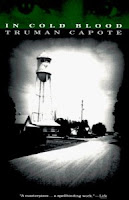
In Cold Blood book cover
In Cold Blood
In Cold Blood
Truman Capote

Welcome to Day SIX of the Book Journey Celebration of Banned Books Week, 2011 Edition!

Be sure to pick up all the clues from Saturday, September 24, through Saturday, October 1 and leave a comment on each of the participating blogs to be eligible to win the prize package. Participating blogs are posted daily at Book Journey. Good luck and have fun!

Reason for Ban: According to the ALA, In Cold Blood has been challenged because it contains sex, violence, and profanity. Um, yeah. I really don't want to read a book that doesn't contain at least one of those things.

In high school, I had a friend who grew up not far from Holcomb, Kansas, where the infamous events of In Cold Blood took place. In fact, shortly after we met, I picked up a copy of this book, read the first chapter or so, and then promptly lost the book. I never did find it, but I always wanted to finish reading it. When I spotted a copy at the Borders liquidation sale, I bought it.

The book is known for ushering in a new style of non-fiction writing. In fact, I found my copy in the literature/fiction section, even though it depicts true events. Truman Capote became interested in the grisly murder of the Clutter family, and began covering it as a reporter for the The New Yorker. He and his friend Harper Lee travelled to Kansas, spending significant amounts of time interviewing townspeople, investigators, lawyers, and the defendants.

For those unfamiliar with the general story, four members of the prominent and well-liked Clutter family, were murdered in their home. The two killers were drifters who spent time in and out of prison throughout the country.

This is never a real “whodunit,” since the reader is privy to the murderers’ identities from the very beginning, before there’s even a murder.  Capote manages to keep the reader interested by juggling two simultaneous storylines, one following the events in Holcomb, and one following the killers. The first fifty pages or so have you waiting, ever more anxiously, for the showdown that you know is coming. You’re kept waiting until the very end before the murders are described from the viewpoint of the killers.

Capote describes the Clutter family and their home at River Valley Farm as quaint, unstylish, outmoded. They seem to spring from a different time and place than Capote, living in New York, must have been used to. At times it seems that he holds them and their lifestyle slightly in contempt. Here he describes the interior of the Clutter home: 
“[T]here were spongy displays of liver-colored carpet intermittently abolishing the glare of the varnished, resounding floors; an immense modernistic living-room couch covered in nubby fabric interwoven with glittery strands of silver metal; a breakfast alcove featuring a banquette upholstered in blue-and-white plastic. This sort of furnishing was what Mr. and Mrs. Clutter liked, as did the majority of their acquaintances, whose homes, by and large, were similarly furnished.”
Dick and Perry, the killers, are seriously troubled young men. But Capote makes you realize that they are people, not monsters.  Perry, in particular, is a pathetic case. He was one of four children. Two of his siblings died tragically, and his other sister, Barbara, has tried her hardest to escape what she sees as a family curse. She had cut off contact with Perry, saying she was afraid of him. This was a far cry from the love she’d felt for him when they were children, before their family had broken up. She recalled some of the hard times, scouring the country, looking for work during the Great Depression, not having enough to eat: 
[She] remembered that once the family had lived for days on nothing but rotten bananas, and that, as a result, Perry had got colic; he had screamed all night, while Bobo, as Barbara was called, wept for fear he was dying.
The book ends with Perry Smith and Dick Hickock paying the ultimate price for their crimes. Even knowing the ending, In Cold Blood is well worth reading as a compelling account of a crime and its aftermath.

~~~
Want to read this? Enter to WIN my copy of In Cold Blood by leaving a comment telling me (along with something else) that you're interested. I'll pick a winner next Monday, October 3rd. 
US entrants only, as I am a poor unemployed blogger with a mountain of student loans.
~~~
And here's your clue:

Tuesday, September 27, 2011

Top Ten Books I Want to ReRead

Top Ten Tuesdays is a weekly feature created by the folks over at The Broke and the Bookish. This week's prompt is to list the Top Ten Books you'd like to reread. You're welcome to join in the fun!

I don't typically reread books, because there are so many books out there that I haven't read yet. Sometimes, though, I do read a book more than once. Usually, it's a short, easy book. I like to reread things I read when I was much younger, to see if they stand up to an adult perspective


1) Anne of Green Gables, Lucy Maud Montgomery. I have been craving a reading of this lately. I need to locate a copy.
2) Their Eyes Were Watching God, Zora Neale Hurston. I read this in high school but didn't really appreciate it. I think I'm ready for it now.
3)Where the Sidewalk Ends, Shel Silverstein. I have a copy of The Giving Tree on my shelf, and I pull it down periodically for a re-read. I don't have any of my old poetry collections by Silverstein, though, and I miss them.
4) & 5) Maus I&II, Art Spiegelman. Because they are awesome. 

6) Little House on the Prairie, Laura Ingalls Wilder. Because it's been too long since I hung out with the little half pint half drunk up.
7) MacBeth, William Shakespeare. Because I am embarrassingly ignorant of the bard. I read a bunch of his stuff when I was younger, but it has all kind of blended together.
8) Number the Stars, Lois Lowry. Another favorite from my childhood.
9) & 10) The Iliad & The Odyssey, Homer. I don't know if these really count as rereads, as I've never read the complete versions. Whatever, I think they count, so that's all that matters.

Monday, September 26, 2011

Happiness in 93 pages

A Happy Man

A Happy Man
Hansjörg Schertenleib
Translated by David Dollenmayer

If you follow me on twitter, you may have seen some gushing as of late relating to this title. If not, let me make this clear: this book is amazing. Best book I’ve read all year, for sure. Go buy it.

The inside flap of my Melville House edition says: 
This quirky novella asks a simple question: Is it possible to write compellingly about a happy person? In the hands of celebrated (but never before translated into English) Swiss author Hansjörg Schertenleib, the answer is yes.
 This Studer is the titular happy man. But he’s not one of those people who shove their good cheer into your face, making you suspect if they are just trying to cover up a sadness lurking under the surface.

No, This seems just plain happy. He has become more accepting and understanding of people as he’s gotten older, and he just can’t be angry or mad at them when they act badly. He has a teenaged daughter whose favorite activity, besides hanging out with her boyfriend, is trying the patience of her parents. While Daniela, This’s wife, is often exasperated by her, This takes it all in stride.  He remembers back to his time as a teen, and is certain that this too shall pass.

I can see how if you were a person in This’s life, this could be frustrating, but as a reader, I’m just a simple observer. Instead of placing myself in the shoes of his wife or daughter, I can try to get to know This, and learn a thing or two about appreciating the beauty in the everyday. In a way, it reminded me of some of my favorite parts of A Tree Grows in Brooklyn, when Francie and her brother are entertained by the simplest pleasures in their otherwise squalid surroundings.

If this was in fact a writerly experiment, it was a resounding success.

As a little treat, here’s Ben Webster playing “Somewhere Over the Rainbow” on the tenor sax, since This is a ballad fan.


*Disclosure: Melville House, the publisher, sent me a copy of this back during the Art of The Novella Reading Challenge. Yay free!

Tuesday, September 20, 2011

Brooklyn Book Festival Update

So. It happened again. No BKBF festival for me. Le sigh. This time, it was because I ended up packing up my apartment and moving across the country under very short notice to start a post-grad fellowship. Stress, I have it.

On a more positive note, I did read my goal of books from 5 festival authors before the event. The books I read were:

The Taste of Salt, Martha Southgate
The Buddha in the Attic, Julie Otsuka
Reservation Road, John Burnham Schwartz
A Tiger in the Kitchen, Cheryl Lu-Lien Tan
Interrupting Chicken, David Ezra Stein

The idea was that I had only read books from 5 of the authors that were going to be there, which seemed like an awfully low number. I wanted to double it, and I did. Since then, I realized that I had actually read 6 authors, since Norton Juster, who wrote The Phantom Tollbooth, was there. That was one of my favorite books when I was younger. I'm thinking it might make a comforting re-read during this time of stress. Hmmmm, I'm actually blogging from the library right now, since I have no internet access. Maybe I'll see if they have a copy....okay, off to do that!

Friday, September 16, 2011

BBAW Day 4: Readers

Book bloggers blog because we love reading. Has book blogging changed the way you read? Have you discovered books you never would have apart from book blogging? How has book blogging affected your book acquisition habits? Have you made new connections with other readers because of book blogging?

My very first post, and my blog title, Wandering in the Stacks, describe how I usually pick a book. This can be hit or miss. I love when I find a hidden gem, some book I’ve never heard of that turns out to be one of my favorites. I also like getting recommendations from friends. It helps when I know my friends have tastes similar to mine. Blogging has just expanded my circle of recommenders (is that really a word? Spell check isn’t yelling at me).

Blogs are great, because I can search someone’s reviews for books I’ve read, and see how our tastes compare. Then I can see what else they’re reading, and what they think of it. I’ve found this is a great was to find new titles or authors.

Another way that bloggers influence my reading is by reminding me of certain titles I’ve been wanting to read. Sometimes it’s as simple as helping me pick my next book from the TBR pile. For example, my neighbor had lent me a copy of Assata, by Assata Shakur. One of my twitter friends was tweeting up a storm about radical 60s politics, and recommended this book. She gushed so much about it that I promised to pick it up asap. I did, and I loved it. I’ve yet to write my review, but it’s coming, promise!

Wednesday, September 14, 2011

Speaking Pigeon English

Pigeon English

Pigeon English
Stephen Kelman

I keep seeing  Pigeon English  described, roughly, as the story of a young boy’s murder told from the perspective of an eleven year old boy, Harri. Initially, I started my review the same way. Then I realized that description isn’t all that accurate, and led me to expect something very different from what the book actually delivers.

So let’s start again. Pigeon English is about a young boy named Harri. Harri has recently emigrated from Ghana to London with his mother and older sister. His father, baby sister, and grandmother are still in Ghana, waiting to join the rest of the family. Harri is trying to figure out how to navigate this new world – learning the slang, making friends, fitting in, finding a girlfriend.

At times, Harri’s world is brutal. I mean, the story opens with a murder. Harri knew “the dead boy” as someone around the neighborhood, someone Harri wanted to be friends with, but never really got to know. Harri and his friend Dean decide that since the police don’t seem to be able to solve the case, they are going to investigate the murder, CSI style. They turn this into one of their many games, like jumping over puddles or acting like zombies. Of course, the stakes in this game are much higher.

At first, the dialect was a bit much. It took me probably 50 pages to figure out that “asweh” meant “I swear.” After a while I started to just go with it, since it seemed like a realistic portrayal of a young immigrant’s speech patterns (as far as I know, which isn’t very far). Harri’s language was jarring in other ways, too. His friends are incredibly homophobic, disablist, and misogynistic, and the language they use reflects this. This may be true to how kids talk and behave, but it was grating.

There are times when Harri’s sweet nature shines through. He remembers one time back in Ghana, when his mother was still pregnant with Agnes, his baby sister. He describes people hanging lanterns from their windows and fences during a blackout, making it look like stars all around. He tells Agnes:
“I fixed the stars for you! They’ll be waiting for you when you come out!”
Mamma: “Thank you, sweet thing!” (She did it in a tiny voice like it was Agnes who was talking.)
 One limitation of Harri’s point of view is that you are limited to brief snippets of what’s going on in the adult lives. I wanted to know more about the other characters. His mother is a nurse, and is having trouble at work. Aunt Sonia burns her fingertips to get rid of her prints so she can’t be deported.
One voice that did NOT work was the talking pigeon. Oooohhhhhhhhhhh, talking pigeon, please shut up! You are a pointless distraction.

Overall, this was a quick, decent read. Nothing remarkable, nothing awful. The Booker committee obviously liked it more than I did, as it was just shortlisted for the 2011 Man Booker Prize. Then again, I was not wild about any of the three longlisted titles I read, so maybe the Booker isn’t my cup of tea.