Wednesday, August 31, 2011

August Wrap Up


In August, I participated in the Art of the Novella Reading Challenge. The idea was conceived by Frances over at nonsuchbook, with Melville House, the publisher, graciously getting on board. Frances decided to read all forty-two novellas during August, and blog about each one. Fortunately, she realized that not all of us were up to such a challenge, and invited readers to set their own goals.

Originally, I was planning on just reading one book. Then, after looking at the list, and trying to see what I could get from my library, I decided to go for the “Fascinated” level – three books. I’m happy to report that I met my (modest) goal.

I’m glad that I decided to read three novellas. I hated the first one I read – Leo Tolstoy’s The Devil. I posted a review, and emailed it, along with a notice of my participation, to Melville House. I was surprised to get a personalized email back, with some suggestions with books I may like better. How nice! The next book was George Eliot’s The Lifted Veil, which I enjoyed. The best ended up coming last, though, with Sarah Orne Jewett’s The Country of the Pointed Firs. I’m really glad that I stuck out that challenge and read some good books. Oh, and I also ended up winning one of Melville House’s daily giveaways – and they sent me SEVEN books. Seven! I am in seven book heaven.

Okay, so let’s break down my reading:
14 books total
10 fiction                        71%
4 nonfiction                   29%
8 female authors           57%
3 works in translation   21%
(I've also started two more, but they'll be counted in next month's totals).

My favorites this month were The Salt Roads and The Country of the Pointed Firs. They are completely different, but both excellent.

I’ve already posted reviews for most of these, which you can find by either checking the archive to the right, or by going to the Books Read 2011 tab linked at the top of this page. The title will take you to the review, if I’ve posted it. For those that I haven’t reviewed yet – well, they’re coming, promise. Most are half-written jumbles of my thoughts, or they are mulling around in my head, as yet uncommitted to the page (er, screen).  A couple are even finished and scheduled to post J
How was your month in reading? Anything you’d recommend – either to read, or to stay far away from?

Tuesday, August 30, 2011

Top Ten Tuesday: Topping Fall's TBR

Top Ten Books That Are On The Top Of My TBR List For Fall
Top Ten Tuesdays are brought to you by the folks over at The Broke and the Bookish.

I don’t keep up with what books are being released, and when, so this list consists of books that I want to read, regardless of publication date.  Also, this is not a commitment to actually read these books. I tend to pick up books based on what strikes me at a particular time. This list is more like “Books That Sound Good and I Want to Read Them Soon-ish, Probably.” Without further ado, the list (in no particular order):

1) To the End of the Land, David Grossman. This is my book club’s next pick. I’m not sure if I’m going to be able to make our next meeting, but I’ll read the book anyway.


2) The Taste of Salt, Martha Southgate. I read Southgate’s critique of The Help and it made me want to read one of her novels. I was able to buy The Taste of Salt online, even though it supposedly isn’t being released until September.


3) Scottsboro, Ellen Feldman. This was recommended to me by fellow blogger nomadreader, after I mentioned I did not like The Help. It was an Orange Prize nominee in 2009.


4) The Penelopiad, Margaret Atwood. Um, Margaret Atwood is awesome. I am ashamed to say I’d never read anything by her until my book club picked The Blind Assassin  to read last year. Since then I’ve also read The Handmaid’s Tale, and I’ve been wanting to read more. When I heard she had a retelling of the Odyssey from the perspective of Penelope, Odysseus’s wife, I had to add it to the TBR list.

5) A Happy Man, Hansjörg Schertenleib. The Publisher, Melville House, sent this to be as part of an awesome collection of books that I won by participating the Art of the Novella reading challenge. This is part of their Contemporary Art of the Novella series. The front flap says that this is the first time the author has been translated into English. That’s got me interested. I like reading books in translation.

6) Mr. Fox, Helen Oyeyemi. Eva over at A Striped Armchair has been singing the praises of Helen Oyeyemi. She’s got good taste, so I thought I’d give this one a try.


7) Assata: An Autobiography, Assata Shakur. I’m interested in radical movements in the 1960s & 70s, so, yeah, I want to read this. It will probably be the first on this list that I actually get to, because I have it sitting next to me, and it’s on loan from my neighbor. Since I’m moving soon, I want to have it read and returned asap.


8)
Pigeon English, Stephen Kelman. I’ve got this Booker longlisted novel checked out from the library, and I want to get to it before I move and have to return it!


9)
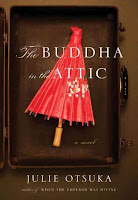
The Buddha in the Attic, Julie Otsuka. Another library book that I need to read and return. I checked this one out in my attempt to read more by this year’s Brooklyn Book Festival authors.

10) American Gods, Neil Gaiman. I’ve never read anything by Gaiman, despite hearing good things. This may be the year to change that.


Monday, August 29, 2011

Now I'll Be Adding Lots of Sarah Orne Jewett to the TBR List

The Country of the Pointed Firs
Sarah Orne Jewett

I gave a little preview of this book last week, and I’ve finally sat down to write a proper review.  The novella is set in the fictional seaside village of Dunnet, Maine. The unnamed narrator is a writer who escapes her big sitting residence for the summer to spend some quiet time working. Over the course of the season she gets to know, and love, both the town and its inhabitants. Reading along, I fell in love with the place right along with her.

If you’re looking for an action packed tale, this is not it. Yes, things happen, but the book is set up like you are living this episode with the narrator. She is staying with a Mrs. Todd, a widow who makes a living renting out a room in her home and selling herbal remedies. She keeps a garden packed full of whatever components she may need.
You could always tell when she was stepping about there, even when you were half awake in the morning, and learned to know, in the course of a few weeks’ experience, in exactly which corner of the garden she might be.
I love the idea of bustling about in a garden, releasing the scents of the plants as you go. Even more than that, I love the idea of still lying in bed while someone else is outside working, and getting to enjoy the fragrances wafting through your window. 

Dunnet was traditionally a village of seafarers. Over the years, the inhabitants have stayed closer to shore, concentrating on lobster and other local fish to provide their living. There are the typical characters lamenting the loss of the "old ways" and fear that the young people are becoming soft. Jewett portrays this timeless complaint with care, and a bit of sly humor. The town retains elements of its oceangoing days, though. Jewett's narrator observes the town from a fine vantage point:
We were standing where there was a fine view of the harbor and its long stretches of shore all covered by the great army of the pointed firs, darkly cloaked and standing as if they waited to embark. As we looked far seaward among the outer islands, the trees seemed to march seaward still, going steadily over the heights and down to the water's edge.
I can just imagine those tall, proud trees being used to make great ships and sailing the world, exploring far-flung ports and the open seas.

But it is Mrs. Todd who forms the heart of this book. She always knows what to do or say to make a person feel better. Here are a couple of my favorite quotes of hers:
"There's some herb that's good for everybody, except for them that thinks they're sick when they ain't." 
"Yes'm, old friends is always best, 'less you can catch a new one that's fit to make an old one out of."
I think I've found a new old friend in The Country of the Pointed Firs.

Thursday, August 25, 2011

Review of "The Salt Roads"

The Salt Roads
Nalo Hopkinson

I’m really glad I kept reading this, because the beginning was not exactly my cup of tea. There were a couple graphic sex scenes, and some mentions of bodily fluids, and well, I sometimes get a bit squeamish. But I persevered, and was happy that I did.

The Salt Roads consists of three main narratives that are connected via the experiences of the goddess Ezili. In Hopkinson’s tale, Ezili is brought forth one night as three slave women bury a stillborn child in the French colony of Saint Domingue (modern day Haiti). Ezili sees how her people, the Ginen, are suffering, and wants to help them. I loved hearing how Ezili learns who she is and how to harness her powers. I’ve never read anything similar describing the birth of a goddess.

The first narrative follows Mer, a slave born in Africa, carried through the hellish Middle Passage, to the Caribbean. Mer has lived twelve years in Saint Domingue – longer than most slaves survive there. She works bent over in the cane fields until she is needed to tend to suffering fellow slaves. The master wants to protect his investment, after all.  Mer uses her abilities to comfort her people the best that she can. She can sometimes speak to the lwa, or spirits, who seek her help in clearing the salt roads back to Africa.

Thais is a Nubian slave, made to work in the brothels of Alexandria. She and her friend Judah, a fellow slave, run away on an adventure to Aelia Capitolina (Jerusalem). The two of them practice their only trade in exchange of passage across the Mediterranean. Hopkinson manages to rework their journey into the origins of the Catholic Saint Mary of Egypt. Thais’s story is the weakest of the three, but the sly religious commentary makes it fun and irreverent.

The character, and narrative, of Jeanne Duval is based on a real person. Duval was a dancer and actress in Paris, during the mid-1800s. She was the longtime mistress of poet Charles Baudelaire. Hopkinson sketches the hard life Duval lived. Her mother and grandmother had to work as prostitutes. She endured sexual harassment from the owner of the venue where she performed. She finds comfort in the arms of one of the other performers – a white woman named Lisette. Both women are searching for men that will elevate their stations and give them long term comfort and stability. I loved how Hopkinson took this historical figure and rewrote her “ending.” There’s not much known about the real Jeanne Duval, and most, if not all, of it comes from the famous men in her life. Nadar, an early French photographer and one time lover, reported that he last saw her alive in 1870, forlorn and hunched over a cane. Hopkinson puts her own spin on this sighting.

I have one major gripe with my version of the book, which I checked out from my library. The book was sitting on y end table, and I noticed it had a bright green label on the spine. My library uses these labels to mark special interest categories, like mysteries or science fiction. I knew that Hopkinson wrote speculative fiction, so I thought perhaps this was labeled as science fiction. Upon closer inspection, I quickly saw this was not the case:


Black interest?
Yes, this book features black main characters. One of the settings is a Caribbean slave plantation. Does that mean that only black people would be interested in it? I hope not! So why the label? I guess one interpretation is that the library has found that this makes it easier for people specifically searching for books about black people to find those books. The problem is that there are a lot of people who would like this book, but aren’t specifically looking for “black interest” books.  I wonder how this book is shelved. Do some library branches have separate “black interest” sections? If so, they may need a visit from Carleen:

Wednesday, August 24, 2011

A True Story from the Underground Railroad

Available at IndieBound
Henry’s Freedom Box
Ellen Levine
Illustrated by Kadir Nelson

I was browsing in my library when I saw this beautiful book perched on a display shelf. How could you not be drawn in by Henry’s adorable little face? Illustrator Kadir Nelson received a Caldecott Honor for his work on this book, and it is easy to see why. As I was reading, I was mesmerized by the expressions on the characters’ faces, especially one of Henry working in a tobacco warehouse.  I admit, I didn’t realize that the Caldecott recognized illustrators - I just assumed that the honor was for the author.  Here, Levin and Nelson work together to bring to life the amazing true story of how one man shipped himself to freedom.

We meet Henry as a little boy. We’re told that Henry doesn’t know how old he is, because slaves aren’t allowed to know their birthdays. In just a few short pages, Henry grows older, gets married, starts a family. Levine tells us how his status as a slave affected him at each stage of his life. Henry's immense psychological burden comes through loud and clear. When Henry makes his daring escape, I was holding my breath, anxious and spellbound, even though I knew the outcome. I can't imagine how terrifying his journey must have been.

I don’t read much children’s literature, so I don’t really know how to compare this to others in the genre. The story just whizzed by. I barely had time to blink before decades had passed and Henry was emerging from his box into a Philadelphia parlor. It seems like a good book to read with a child, so you can discuss it. The author's note at the end adds a few details about how Henry managed his time in the box, which are helpful. I can imagine a child asking lots of questions about Henry’s situation, and it could be a great teaching opportunity. Keep the tissues nearby, though! I was tearing up at the end.

You can watch Levine discuss the book at her website. She tells us that the Fugitive Slave Act was passed shortly after Henry escaped slavery. Rather than risk being sent back, he sailed to England to promote the abolitionist cause. 

Tuesday, August 23, 2011

Top Ten Tuesday: Review-less

Top Ten Tuesday is an original feature/weekly meme hosted by The Broke and the Bookish. Each week they, and other bloggers/readers, make a top ten list from a given topic. This week's topic is...

Top Ten Books I Never Reviewed

This year is the first year I started tracking what I read. I also just started this blog oh, about a month ago. While I am trying to post reviews of books I read before blogging, there are a bunch that I’m just not going to get to. So this list is a shout out to great books I’ve read, but never reviewed.

1)      Nervous Conditions, Tsitsi Dangarembga. Thoughtful, well written account of a girl growing up in colonial Rhodesia.

2)      The Handmaid’s Tale, Margaret Atwood. Scary dystopian stuff. Offred? Talk about losing your identity.

3)      Aya, Marguerite Abouet. This graphic novel is definitely not a children’s book! This book follows the adventures of a group of young women growing up in the Ivory Coast.

4)      Twenty Fragments of a Ravenous Youth, Xiaolu Guo. Not what I expected as a picture of a modern young Chinese woman.  In a good way.

5)      Stiff, Mary Roach. Who knew a book about dead bodies could be so fascinating?

6)      Reading Lolita in Tehran, Azar Nafisi. A beautiful celebration of literature, told by an Iranian university professor after she’s been forced to resign her position.

7)      Out Stealing Horses, Per Petterson. First, I love the title. And the cover. Oh, and the story about a man remembering his time at his family’s vacation home as his parent’s marriage disintegrates.

8)      A Heart So White, Javiar Marias. Language, love, travel, mystery – what more could you want?

9)      Catch-22, Joseph Heller. One of my all-time favorites.  The absurdity of war seems to be an always relevant topic, unfortunately.
10)   A Prayer for Owen Meany, John Irving. I admit, my arm had to be twisted before I would read this. Now I can’t stop singing its praises. Irving has a true gift for writing about children.


Monday, August 22, 2011

Edwidge Danticat Talks About Writing

Edwidge Danticat discusses what it is to be an artist and immigrant with Paul Holdengraber.
(Trigger Warning: She reads material that describes an execution.)


“For a lot of writers I think the reader and the writer overlap” - Edwidge Danticat.

I love that. I want to read things that the author loves, that the author would want to read. It's like an invitation into their world.

Danticat was discussing her recent book, Create Dangerously. I haven't read it, so will give you a summary from Princeton University Press:
"In this deeply personal book, the celebrated Haitian-American writer Edwidge Danticat reflects on art and exile, examining what it means to be an immigrant artist from a country in crisis. Inspired by Albert Camus' lecture, "Create Dangerously," and combining memoir and essay, Danticat tells the stories of artists, including herself, who create despite, or because of, the horrors that drove them from their homelands and that continue to haunt them. Danticat eulogizes an aunt who guarded her family's homestead in the Haitian countryside, a cousin who died of AIDS while living in Miami as an undocumented alien, and a renowned Haitian radio journalist whose political assassination shocked the world. Danticat writes about the Haitian novelists she first read as a girl at the Brooklyn Public Library, a woman mutilated in a machete attack who became a public witness against torture, and the work of Jean-Michel Basquiat and other artists of Haitian descent. Danticat also suggests that the aftermaths of natural disasters in Haiti and the United States reveal that the countries are not as different as many Americans might like to believe."
I've only read one book by Danticat, The Dew Breaker. The title refers to a group of paramilitary torturers who sneak up to houses early in the morning to claim their victims. Yeah, scary stuff.


The Dew Breaker
It is set, primarily, in Haiti, with some scenes in Florida and others in Brooklyn, New York. One of the characters is a former member of the notorious Tonton Macoute. Another is a young Haitian American sculptor. The book is a series of interconnected stories rather than one continuous narrative, but they form a cohesive whole.

The novel certainly has implications on what it means to be a immigrant artist working in the United States. I'd like to see what Danticat has to say directly on the subject in her nonfiction work. Another book to be added to the ever-growing Mount TBR.