Showing posts with label translated. Show all posts

Thursday, September 6, 2012

A Palace in the Old Village

A Palace in the Old Village
Tahar Ben Jelloun

Mohammad, a Moroccan man living in France with his family, suddenly realizes that he is facing imminent retirement. He is forced to stop working at the auto factory where he's been employed for the last 40 years, ever since he emigrated from his beloved hometown in Morocco.

He considers retirement a form of death, Indeed, he worries over the fate of others who, seemingly healthy and full of life, quickly passed on when it was time for them to retire. He wonders - what will fill his days now that the factory has no more use for him? What is his purpose? Surely his children will look after him?

Mohammad will not live out his years aimlessly. He returns to his village to fulfill the ideals he was brought up believing in with all his heart. He will build a great house, give glory to his God, and live surrounded by his children. Yes, even his daughter who married that Italian Christian.

Unfortunately, his children are "Frenchies" through and through. Their adopted homeland has laid its claim on them.

Despite the very specific setting, the themes in The Palace in the Old Village are resoundingly universal. Generation gaps, family clashes, fear of outliving your usefulness. For such a slim little novel, there's quite a bit to work with.

Saturday, August 4, 2012

Some Quick Thoughts

Every Last One
Anna Quindlen

At work, we have a book exchange box. I pulled this one out of it awhile ago, as I've been wanting to give Anna Quindlen another try. I read Blessings several years ago, and thought it was okay, but nothing special. However, I've read some short nonfiction from her and really like it a lot.

Well, I think I'll stick to her nonfiction. Every Last One was... fine. Tragic, which certainly appeals to me. But there was a distance between the reader and the Mary Beth, the narrator, a buffer, that meant that I never really felt a true connection with her. She has trouble connecting with the other people in her life, too.

There is a lovely piece near the beginning where Mary Beth describes the breathing patterns of each of her children. Their sounds while sleeping mirror their personalities while awake. I am fascinated by idea of what makes a person uniquely "them," even as they sleep.

So, not a bad book, but just not worth raving about.

Miral
Rula Jebreal
This is a book that could have been really good. Hind, a young, Arab woman in Jerusalem finds 55 orphaned or abandoned children, victims of the violence erupting in the city. She changes the course of her life to serve this children and the many more like them that are sure to appear. She leverages her considerable connections to keep them housed, fed, and as safe as possible.

The book is divided into parts, each part focusing on one of the female characters. Miral, of course, is one of them, a girl sent to Hind's orphanage and school after her mother dies. Her father is at a loss as to what do do with Miral and her younger sister. He trusts Hind to look after them and educate them, and he does his best to see them as often as possible.

Unfortunately, the tone never seemed to change, so all of the women just blended together for me. Further, just like in Every Last One, there was a distance between the characters and the reader. In fact, in the first chapter, I thought perhaps I was reading a journalist telling of an event that was going to set up the "real" action of the book. Nope. And then I realized the book was written by a journalist. I have  not had much luck with journalists who write novels.

Here's a thing I like about blogging: it forces me to think about why  a book didn't speak to me. Here are two decent books, ones I'm sure many people would like, but they weren't for me. And in writing about them, I realize that despite the vastly different settings, time period, etc, the problem I had with both of them was that I could not connect with the main characters. I don't have to like the main characters of the books I read, but I do have to get them.

What is a must for you when you read? Characters? Plot? Writing? Something else? Share in the comments.

Thursday, May 17, 2012

Second Selection from a Year of Feminist Classics

The Book of the City of Ladies
Christine de Pizan

I know I'm posting my thoughts on this book well after the other Year of Feminist Classics readers. I really struggled to finish this, and have further struggled with writing up a review of it.

No doubt, this is an important text. It's certainly "pro-woman" in the sense that de Pizan is defending women from pretty vile attacks by other writers. However, I'm thankful that feminism has come a long way since the 1400s.

For example, there's a heavy emphasis on virginity and equating "virtue" with virginity. At the same time, there is an implicit recognition that young people, regardless of gender, are typically sexual beings. See the following passage:

"This lady (Minerva) was not only extraordinarily intelligent but also supremely chaste, remaining a virgin all her life. It was because of her exemplary chastity that the poets claimed in their fables that she struggled long and hard with Vulcan, the god of fire, but finally overcame and defeated him. This story can be interpreted to mean that she conquered the passions and desires of the flesh which so vigorously assail the body when one is young."

There were times when her arguments sounded depressingly familiar:

"Yet there are still those men who go around claiming that women know nothing of any worth. It's also a common way to mock someone for saying something foolish by telling them they're thinking like a woman."
Poster from 2012 movie Think Like a Man

How much has society really progressed when in 2012 we have a movie based on Steve Harvey's book Act Like a Lady, Think Like a Man?

Why is "woman" still a slur? Why are women still considered less-than? It's disheartening at times to really think about these issues.

While The Book of the City of Ladies may be interested in dismantling gender based privilege (although that's certainly debatable), it is very interested in propping up other systems of oppression, such as heterosexism, classism, racism, Christian privilege, gender essentialism - you get the idea. Only certain women should get the benefit of the doubt, should be considered as fully human as their male counterparts.

The last portion of the book was particularly difficult to complete. It's basically a list of a bunch of early female Christian martyrs who died horrifically. Far from serving as example of how to live my life as a proper woman, it made me thankful that my family left Catholicism shortly after I was born, so these stories didn't give me nightmares when I was a young child!

At the end of the day, I'm glad I read this. It's probably the oldest book I've ever read in it's entirety, so that's something :-) Just not exactly a "fun" read.

Thursday, February 16, 2012

Walking in Cairo

Palace Walk
Palace Walk
Naguib Mahfouz
Translated from the Arabic by William M. Hutchins & Olive Kenny

I first heard about this book a couple years ago, when a woman in my book club recommended it to me. She and I have pretty similar reading tastes, so I was interested in picking it up. I was in the Strand once and they had a copy of the second and third books in the trilogy, but not Palace Walk, the first. I reluctantly passed them by, figuring I'd get to them sooner or later.

I'm glad that I finally made the time to read this. Palace Walk is set in Cairo, Egypt during and immediately after World War I. For the vast majority of the novel, the conflicts are in the background. There's some talk about the Australians, or German bombs, but nothing shakes the family compound on Palace Walk.

Life beings every day before dawn, when Amina, the mother, slips out of bed, wakes the servant, and begins the pounding of the bread that wakes the rest of the family. She works tirelessly to ensure that her family, and especially her husband, Al-Sayyid Ahmad al-Jawad, is catered to in every way.

Al-Sayyid Ahmad is the unquestioned ruler of the family. He runs his household with an iron first, forbidding music, celebrations, drinking, even lighthearted conversations. He cannot imagine that anyone dares to disobey him outside his presence. His sons often describe the house as a prison. His wife and daughters seem more resigned to their fate - perhaps because they are seldom allowed out in the world. At one point, the engagement of Khadija, the eldest daughter, appears in jeopardy because the suitor has seen her face.

Of course, al-Sayyid Ahmad does not feel the need to hold himself to the same standard he holds his family. He goes out nightly to parties with his friends, where they get drunk, play music, are entertained by female performers, and pursue affairs. He makes sure that he is able to somewhat hold it together before coming home to his wife, who is waiting, awake, to help him prepare for bed.

There are some incredibly troubling incidents in the book. Several of them deal with the eldest son, Yasin. He has a complete contempt for women. He regularly calls them "bitches," and sees them simply as objects for his pleasure. When his father interrupts an attempted rape, he accuses his son of being a criminal - but naturally, the authorities are not involved.

Eventually, the focus on the book shifts from the shielded compound walls to events outside. Following the end of the war, Egyptians begin to agitate for self-determination. They want the foreign powers out of their country. They want to rule themselves. Fahmy, the middle son, becomes caught up in this struggle. He talks about the issues during the family's daily coffee hour, the one time of day where they can relax and talk freely outside the presence of al-Sayyid Ahmad. Slowly, each of the family members begins to be affected by the increased conflicts. In this way, the outside and inside are brought together.

I try to read books like this with an open mind. Did I like any of the male characters? Nope, not at all. Was I reading this through a distinctly white American feminist lens? Yes, because that's who I am. So while I couldn't be happy with the way the characters lived their lives, I could still appreciate the complicated family dynamics, the questions about obeying authority, the desire for a better life. I'm interested in learning more about the author - what were his views on these issues? I'd love to know if my hunches are in the right direction or way off base.

I do plan on reading the next two books in the trilogy. However, I admit I'm a bit reluctant to read the next one, Palace of Desire, as it looks like Yasin is the focus. I am much more intrigued by the third novel, Sugar Street, which looks like it focuses more on Khadija. I wanted more from her perspective in Palace Walk, and I never really got it.

Want more like this? Try:
  • Ahdaf Soueif, The Map of Love. This is an Egyptian novel with a present storyline and one set in the early years of the 20th century. Definitely more female centered. There's a lot about language, and critiques about the colonial system.
  • Fatima Mernissi, Dreams of Trespass: Tales of a Harem Girlhood. The true story of a girl growing up in Morocco in the 1940's and 50's. Mernissi disabuses Western readers of the notion that a harem is a place of lusty indulgence. Rather, it's how an extended family of female relations lives together in one household. She does critique the system, though - it's not just a jolly place of eating olives and laughing.
Apologies to those who may see this coming up twice in their feed readers - I accidentally hit "publish"  before it was ready. Oops!

Thursday, February 9, 2012

Along for the Ride

Voyage Along the Horizon
Javier Marías
Translated from the Spanish by Kristina Cordero

I first discovered Javier Marías by pure accident, while I was wandering around my library in Brooklyn. The book was A Heart So White, and I absolutely fell in love with it. I've been meaning to read more from him, but didn't get a chance to until I finally picked up Voyage Along the Horizon just recently.

Voyage was Marías's second novel, written when he was only twenty two years old. As such, it does read as less polished than A Heart So White, but I still really enjoyed it. It's playful, a book about a book about an author trying to learn the details about a story, a bit of a writerly experiment, if you will.

The language is purposefully stilted and old fashioned. It feels like you are reading an early 1900's English mystery novel. If that's your kind of book, you should appreciate this. If it's not typically your type of book, you still can enjoy the meta whimsy.

Despite the borrowed style, this book is still very much Marías. He writes looooooooooonnngggg paragraphs - blocks of text can go on for pages. It can leave you a little breathless, but it does have the effect of pulling you into the scene.

One of the things I like about Marías is his clever way of inserting little observations about human behavior into seemingly unrelated text:
...Meffre and the pianist had met, but with rather unpleasant consequences, two years earlier at Baden-Baden. Their interaction had been somewhat circumstantial, and even though the slight friction that had erupted between them in Germant during a performance of Monteverdi's Ulysses, involving some box seats and a certain young lady, was more or less ancient history by now, both men (Meffre in particular) still seemed to remain slightly, quietly hesitant about initiating any kind of direct conversation even when the occasion all but required it. 

Want more like this? Try:
  • Agatha Christie, Death on the Nile. Something about the tone of Marías' narrator reminded me of Hercule Poirot. A bit fussy, but interesting and engaging. Plus, there are people getting killed on a boat.
  • Sir Arthur Conan Doyle, The Hound of the Baskervilles. Again, the tone is very similar.
  • Various Authors, One Thousand and One Nights. One of the most famous books using a framing device.

Monday, January 23, 2012

Playing Catch Up

Okay, I have given up on the idea of doing full reviews of any of the books I read in 2011 but have yet to review. I've decided to just present them with some quick thoughts on each. I've arranged them by my star rating, starting with five stars.

*****
Five Stars
Billiards at Half-Past Nine, Heinrich Böll. Translated from German.
Yeah. This. This was really, really good. The Faehmel family is a German family living near Colonge. Heinrich, the family patriarch, loved to the city when he was a young man to pursue a career as an architect. His son, Robert, was conscripted into Germany's army during WWII to be a demolition expert. The book's events are all over one day, Heinrich's 80th birthday, but much of the story is told in flashbacks. Old acquaintances pop up, the past and present bleed together.
Melville House sent this to me for participating in The Art of the Novella Reading Challenge

****
Four Stars
To the End of the Land, David Grossman. Translated from Hebrew.
My book club decided to read this back in September. I actually ended up moving before we met to talk about it, which is probably a good thing because it took me forever to read. I just could not get into it, for some reason. I don't know if it was just my mood, or what. This book was INTENSE, and I was under a lot of stress at the time, so it just didn't seem like a good fit. There is some beautiful writing here, but the emotions were so raw that sometimes it was hard to read. I mean, it's about a woman who thinks her son is getting out of the army and then he volunteers to go back for one last mission. She's convinced that if she doesn't go home, there will be no one for the "informers" to tell that he's hurt - or worse. So she goes for a walk - a really long walk - with an old friend.
Silver Sparrow, Tayari Jones.
The story of a bigamist and his two families, only one which knows of the other. Heartbreak galore, just what I like.
Shadow Tag, Louise Erdrich.
I realized that I've never really read anything by Native American writers (that I can remember), so when I saw this book about a wife who is keeping two journals because she discovered her husband was reading one of them, I couldn't resist picking it up. I'm glad I did, because it was excellent. The couple has an incredibly complicated, tumultuous relationship, which was difficult to read about at times. You want things to end on a happy note, but perhaps that's too much to ask for.
Sula, Toni Morrison.
If I had read this at another time, it probably would have been a 5 star read. However, I picked it up not long after finishing Toni Morrison's A Mercy on audio, which completely blew me away. This was a wonderful book, but not *quite* as good as A Mercy, so it gets 4 stars. The gist - two girls grow up as best friends in a small town in the midwest, facing the limits of their gender, class, and race. The writing will take your breath away.

***
Three Stars
The World We Found, Thrity Umrigar
I read Umrigar's The Space Between Us a couple years ago for my book club. I thought it was just okay, even though so many of my fellow book clubbers were in love with it. I wanted to give her another try, because her books are so popular. Unfortunately, this one wasn't a favorite. It's not bad, by any means, but her style just isn't for me. This book centers around four friends who were "comrades" working for a more just India back in their university days. Now, 20-some years later, have drifted apart. When one of them, now  living in the United States, is diagnosed with cancer, the four are determined to reunite. However, that is not as simple as it seems.
I won this in a publisher's giveaway hosted on S. Krishna's Books

America and the Pill, Elaine Tyler May
This was an eye opening book about the invention and usage of oral contraceptives in the United States. May's father was a scientist involved in the approval process, and she grew up with the pill in her consciousness. She does a good job explaining the origins and controversies of the pill, while acknowledging the interplay of gender, race, and class. The biggest drawback was her use of a an internet survey of pill users, whose anecdotes where interspersed throughout the book. It just felt a bit rushed and unprofessional. 

Thursday, December 29, 2011

Stumbling Along this Path

The Pathseeker
The Pathseeker
Imre Kertész

I spent the majority of this book thinking "I'm pretty sure I know what's going on, but I CAN'T BE SURE AND IT IS DRIVING ME TO DISTRACTION."

Yeah. It's like everything is a secret. Only one character has a name, you're not told where the story is happening, you don't know what's being investigated, or on whose orders. 
Fortunately, my Melville House edition comes with a handy afterword by Tim Wilkinson, which answered some of my questions.

Of course, there is a distinct post-WWII Eastern European feel to everything, so you can make an educated guess or two. 

At one point, the commissioner and his wife are telling each other an old folk tale. His wife recounts the version she was told. The commissioner shrugs, making it clear that he's not convinced at the story's accuracy. The wife asks: 

"Well, wasn't that what happened?"
"That is what they want us to believe, at any rate," he responded.
That sense of foreboding permeates the entire novella. It's certainly worth taking the time to slowly immerse yourself, as it does not unravel as you might expect.

Disclosure: Melville House sent me this book after participating in the Art of the Novella reading challenge.

Monday, November 21, 2011

Looking Back: February

I bring to you the second of a seven or so part series, looking back on my 2011 pre-blogging reads.

February
 was a much better month for reading than January.

Total: 9 books
7 fiction                          78%
2 nonfiction                   28%
5 female authors           56%
3 works in translation   33%

Algerian White, Assia Djebar*** This memoir was good, and I would have enjoyed it more if I had any idea who or what she was talking about. It's the author's recounting of Algeria's struggle for independence,and many of the intellectuals who lost their lives during the events. I definitely want to read more by Djebar, especially An Algerian Cavalcade, which has been on my TBR list for well over a year.

Fun Home: A Family Tragicomic
, Alison Bechdel***** Graphic novel about a young woman growing up, coming out as a lesbian, and discovering her father was gay. Really, really good. Bechdel is also famous for the Bechdel movie test, which a film passes if it has 1) Two named female characters 2) who talk to each other 3) about something other than a man. It's scary how many movies fail, big time.

Circle of Magic: Daja's Book
, Tamora Pierce****I was running out of reading material and had these on my shelves, leftover from my classroom library days. I had heard Tamora Pierce wrote really strong, well rounded female characters, so I gave these a try. I was pleasantly surprised.
Circle of Magic: Tris's Book, Tamora Pierce****See above.
Circle of Magic: Sandry's Book, Tamora Pierce****See above.

I am the Messenger, Markus Zusak***Disappointing. I really liked The Book Thief, but this was not as strong. Just...enh. Not bad, but not anything I'd read again, or gush over.

Dona Flor and Her Two Husbands
, Jorge Amado**** Cute, fun story with magical realism elements dealing with what makes the title character a happy wife.

The Death of Artemio Cruz
, Carlos Fuentes***This was really well written, but the graphic subject matter got to be a bit much for me. I'd give Fuentes another try, though. 

What We Talk About When We Talk About Love
, Raymond Carver***I was stranded at the airport and started chatting with a guy in the same position. He was a reader, and insisted I borrow this for the flight home. I read the whole short story collection on a 2 hour flight. It was good, but I wish I had more time with it to better reflect my thoughts.

Assia Djbar. I just really like this picture by Irmeli Jung, so I'm posting it.

Saturday, November 19, 2011

Persepolis

Persepolis
Persepolis
Written & Illustrated by Marjane Satrapi

Yes, I know I am quite late to the Persepolis party. Oops. But I suspect not a few readers haven't gotten around to this famous graphic novel yet, so take this post a a reminder to go track it down.

Persepolis is the memoir of Marjane Satrapi's growing up in the Iranian Revolution. Her parents are Communists who supplement her school education with books like a comic edition of "Dialectic Materialism," which contains arguments between Rene Descartes and Karl Marx. Marjane is intrigued that Karl Marx resembles her God:

Marx and God facing each other. Caption reads It was funny to see how much Marx and God looked like each other, Though Marx's hair was a bit curlier.
Marjane is a willful, stubborn child growing up in a violent, confusing world. Her parents attempt to walk a fine line between keeping her safe and protected from knowledge that may hurt her and telling her information that's necessary for her to have an idea what's going on.

When it seems that they can no longer keep her safe in Iran, Marjane's parents send her to school in Europe. That's where Persepolis ends and where Persepolis II begins.

I am really happy that I finally read this. Satrapi did a wonderful job telling the story of the revolution from a child's perspective, while still writing a sophisticated, adult book. The emotions of all the characters are perfectly communicated through a combination of dialogue and illustration. If you haven't gotten your hands on this yet - Go!

(You can buy this title through  this affiliate link)

Thursday, October 20, 2011

A Pair of Mini Reviews

Death and the Penguin

I’m rather behind on reviews, so I thought I’d post a pair of minis to try to catch up. These two books couldn’t be more different, but hey – I’ve got eclectic tastes.

Death and the Penguin*
Andrey Korkov
Translated by George Bird

Death and the Penguin is the story of a Viktor, a frustrated writer, and his unwitting involvement in a Ukrainian crime syndicate.  When we meet Viktor, he’s a pretty pathetic sight. His girlfriend’s left him, he doesn’t have a job, and his only companion is a depressed penguin, Misha, that he adopted from the zoo after it could no longer feed the poor animal.

Viktor writes short stories, but can’t even get them published in a newspaper that “generously published anything, from a cooking recipe to a review of post-Soviet theatre.” Two days after being rejected everywhere, he gets a call from the Editor-in-Chief of a newspaper, asking him to come in. He’s offered a position writing obituaries – a somewhat morbid, but decently well-paying gig.

Of course, nothing is as it seems. Soon Viktor’s life is full of new characters, including a young girl left in his charge, a young army officer, and a baby-sitter-turned-paramour. Viktor and Misha are invited to attend the funerals of Viktor’s obituary subjects. Our clueless protagonist asks no questions, until it may be too late.

I enjoyed this book quite a bit. It’s one of those books where you just have to suspend your disbelief and dive into the absurdity. It’s a pretty quick read, as the chapters just zoom along, much like the events in Viktor’s life. There’s a followup, Penguin Lost, that I’m sure I will read soon.

The Catcher in the Rye
The second book for review today is that old classic, The Catcher in the Rye, by J.D. Salinger. I have to confess that I never read this in high school, and have been avoiding it ever since. After seeing it mentioned several times during this year’s Banned Books Week, I decided to go ahead and read it.

My thoughts? Meh. It wasn’t nearly as excruciating as I was prepared for it to be. Yes, Holden is whiny and sophomoric. I may have pulled a muscle with all the eye rolling, but I’ll recover. On the whole, not terrible. Is there anything else to say? I think this book has been reviewed ad nauseum.

I do wonder what my fifteen year old self would have thought about it. Would I have had more of a reaction? I don’t know. I do think there are some books you have to read (at least for the first time) at a certain age, or they lose something. I read 1984 about four years ago, and had much of the same reaction. I could recognize why it’s a classic, but it just didn’t do anything for me. Have you ever had this experience?

*The publisher, Melville House, sent this book after I won a prize drawing by participating in Melville House’s Art of the Novella reading challenge. My posts for that challenge are here. 

Monday, September 26, 2011

Happiness in 93 pages

A Happy Man

A Happy Man
Hansjörg Schertenleib
Translated by David Dollenmayer

If you follow me on twitter, you may have seen some gushing as of late relating to this title. If not, let me make this clear: this book is amazing. Best book I’ve read all year, for sure. Go buy it.

The inside flap of my Melville House edition says: 
This quirky novella asks a simple question: Is it possible to write compellingly about a happy person? In the hands of celebrated (but never before translated into English) Swiss author Hansjörg Schertenleib, the answer is yes.
 This Studer is the titular happy man. But he’s not one of those people who shove their good cheer into your face, making you suspect if they are just trying to cover up a sadness lurking under the surface.

No, This seems just plain happy. He has become more accepting and understanding of people as he’s gotten older, and he just can’t be angry or mad at them when they act badly. He has a teenaged daughter whose favorite activity, besides hanging out with her boyfriend, is trying the patience of her parents. While Daniela, This’s wife, is often exasperated by her, This takes it all in stride.  He remembers back to his time as a teen, and is certain that this too shall pass.

I can see how if you were a person in This’s life, this could be frustrating, but as a reader, I’m just a simple observer. Instead of placing myself in the shoes of his wife or daughter, I can try to get to know This, and learn a thing or two about appreciating the beauty in the everyday. In a way, it reminded me of some of my favorite parts of A Tree Grows in Brooklyn, when Francie and her brother are entertained by the simplest pleasures in their otherwise squalid surroundings.

If this was in fact a writerly experiment, it was a resounding success.

As a little treat, here’s Ben Webster playing “Somewhere Over the Rainbow” on the tenor sax, since This is a ballad fan.


*Disclosure: Melville House, the publisher, sent me a copy of this back during the Art of The Novella Reading Challenge. Yay free!

Tuesday, August 30, 2011

Top Ten Tuesday: Topping Fall's TBR

Top Ten Books That Are On The Top Of My TBR List For Fall
Top Ten Tuesdays are brought to you by the folks over at The Broke and the Bookish.

I don’t keep up with what books are being released, and when, so this list consists of books that I want to read, regardless of publication date.  Also, this is not a commitment to actually read these books. I tend to pick up books based on what strikes me at a particular time. This list is more like “Books That Sound Good and I Want to Read Them Soon-ish, Probably.” Without further ado, the list (in no particular order):

1) To the End of the Land, David Grossman. This is my book club’s next pick. I’m not sure if I’m going to be able to make our next meeting, but I’ll read the book anyway.


2) The Taste of Salt, Martha Southgate. I read Southgate’s critique of The Help and it made me want to read one of her novels. I was able to buy The Taste of Salt online, even though it supposedly isn’t being released until September.


3) Scottsboro, Ellen Feldman. This was recommended to me by fellow blogger nomadreader, after I mentioned I did not like The Help. It was an Orange Prize nominee in 2009.


4) The Penelopiad, Margaret Atwood. Um, Margaret Atwood is awesome. I am ashamed to say I’d never read anything by her until my book club picked The Blind Assassin  to read last year. Since then I’ve also read The Handmaid’s Tale, and I’ve been wanting to read more. When I heard she had a retelling of the Odyssey from the perspective of Penelope, Odysseus’s wife, I had to add it to the TBR list.

5) A Happy Man, Hansjörg Schertenleib. The Publisher, Melville House, sent this to be as part of an awesome collection of books that I won by participating the Art of the Novella reading challenge. This is part of their Contemporary Art of the Novella series. The front flap says that this is the first time the author has been translated into English. That’s got me interested. I like reading books in translation.

6) Mr. Fox, Helen Oyeyemi. Eva over at A Striped Armchair has been singing the praises of Helen Oyeyemi. She’s got good taste, so I thought I’d give this one a try.


7) Assata: An Autobiography, Assata Shakur. I’m interested in radical movements in the 1960s & 70s, so, yeah, I want to read this. It will probably be the first on this list that I actually get to, because I have it sitting next to me, and it’s on loan from my neighbor. Since I’m moving soon, I want to have it read and returned asap.


8)
Pigeon English, Stephen Kelman. I’ve got this Booker longlisted novel checked out from the library, and I want to get to it before I move and have to return it!


9)
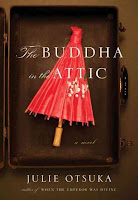
The Buddha in the Attic, Julie Otsuka. Another library book that I need to read and return. I checked this one out in my attempt to read more by this year’s Brooklyn Book Festival authors.

10) American Gods, Neil Gaiman. I’ve never read anything by Gaiman, despite hearing good things. This may be the year to change that.


Thursday, August 18, 2011

Along the Nile in Sudan

Season of Migration to the North
Tayeb Salih

Season
is full of pairings. There are the two main characters, two sets of deaths, the North and the South, Islam and non-believers, those in the government and those with influence in the villages. The novel centers around two men – Mustafa Sa’eed and an unnamed narrator. Both are Sudanese who spent time in London. The book follows these men, and explores their brief, but intense, relationship. They both spend time in the land of their colonizers, and believe that they can come back from their time abroad unchanged. That is not to be.

The book is difficult to read. Sa’eed is wholly unlikable, and honestly, a bit scary. He repeatedly tells us that he has no emotions, and we find out rather quickly he’s killed at least one person and is perhaps responsible for the deaths of several others. His victims aren’t exactly blameless paragons of virtue, but that doesn’t make their deaths any more palatable.

There’s also plenty of misogyny from the characters. There’s one scene where several village elders are sitting around, talking rather graphically about sex, comparing women, discussing the merits of female circumcision. I don’t feel that Salih was trying to exploit these issues, or celebrate them, but again, it just makes for difficult reading.

There is one scene in particular that shines with pure beauty. The narrator is traveling from his village to Khartoum. Along the way, the lorry in which he is riding stops for the night. The people rest, nourish themselves, and dance and sing with pleasure.
We formed ourselves into a large circle into which some of the younger men entered and danced in the manner of girls. We clapped, stamped on the ground, and hummed in unison, making a festival to nothingness in the heart of the desert.
Season of Migration to the North has been declared “the most important Arabic novel of the 20th century” by the Arab Literary Academy in Damascus. I agree this is an important work. The themes – colonialism, racism, are big ones, and they are handled well. Salih provides no easy answers. He makes you think about the legacy of colonialism, and points out its far-reaching and lasting effects. It feels timely now, even though it was originally published in 1966. But I felt a bit like Mustafa - I read this on an intellectual, not an emotional, level. I couldn’t say that I enjoyed it, but I am glad that I read it.

Note: Many thanks to 
M. Lynx Qualey over at Arabic Literature (in English) for promoting Arabic literature this summer, and year-round. 

Wednesday, August 17, 2011

Swimming in the Light

I know what I'm getting the hubby for his birthday:


While watching this I immediately thought of the Gabriel Garcia Marquez short story "Light is Like Water." Go read it. Seriously. It will take you two minutes.

'"Light is like water,' I answered. 'You turn on the tap and out it comes.'"

Sunday, August 7, 2011

Projections for This Week

My reading and blogging goals for the week:

Finish blog post for Cleopatra. I'm having a hard time writing this review, for some reason. It's non-fiction, and it seems that I have to approach my review in a much different way than when I'm writing about fiction. I have another non-fiction post coming up as well, so I have to figure out how to deal with these.


I need to read my second book for the Art of the Novella challenge. My first read was a bit of a dud. I'm hoping the next is better. I'm aiming for the "Fascinated" level, so I'll have one more to go.

I want to finish Season of Migration to the North. It's part of the summer reading challenge over at arablit.

I still have five library books that I haven't even opened, plus I'm in the middle of a book I purchased at the Border's liquidation sale. Must get reading!

Generally, I want to write a few reviews to have ready to go when I get busy, or are in a bit of a blogging slump. Any tips, fellow bloggers?

Friday, August 5, 2011

The Russians are Not My Friends

The Devil
Leo Tolstoy

ARE YOU KIDDING ME??? She’s the “devil”?
To be fair, I probably should have seen that coming.

I. Do. Not. Get. It. Why do people like Tolstoy?

It has been nearly three years since I read Anna Karenina, and hated it. The only other classic Russian novel I’d read was Crime and Punishment, which, guess what? I also hated it.

Okay, I will try to stop sputtering and actually talk about the novella. I gave this a try because I thought maybe my problem with Tolstoy and Dostoyevsky was that their books were so needlessly loooonnnnngggg. (Seriously - have you read Crime and Punishment? Have you read The Tell-Tale Heart? Poe does a much better job in like 1/300th of the pages.)

Apparently, the length is not what is bothering me. This slim little volume checked in at a mere 100 pages, and that was with an alternate ending thrown in.

So, Yevgeny Irtenev is the young master of a Russian estate. He takes over after his father’s death, and tries to rebuild, as dear old dad had run up a bunch of debts, and was in danger of losing everything.

Yevgeny is single, and likes to have a bit of fun with the ladies. Only “for his health” of course.  Now that’s he’s moved out to this estate, there’s no convenient place for him to find some action. He doesn’t approve of relations with a married woman, or with a “maid in his own village,” or a peasant woman. Finally, after two months, he just can’t take it anymore and turns to a trusted family friend to bring him a woman.

It goes downhill from there. There’s the awful woman with the loose morals contrasted with Yevgeny’s perfect, but featureless wife. There’s the hen-pecking mother-in-law.  There’s all this talk about “poor” Yevgeny, who still has the means to take a vacation on the Crimean peninsula for two months.  

The one thing I “liked” was that Tolstoy picked the ending that he did. The alternate was even more awful.

If anyone has a suggestion for a Russian novel that is different from these, and I actually might like, I’d be willing to try it. Of course, I may have to wait another three years to get over this one.

Wednesday, August 3, 2011

Worth Taking a Visit


Visitation
Jenny Erpenbeck
Translated from the German by Susan Bernofsky
New Directions, 2010

In a slim, 150 page novel, Jenny Erpenbeck manages to cover a wide expanse of history, geography, and individual experience, all centered around a lakeside home outside of Berlin. It is set, primarily, in the 20th century, so war figures prominently, either lurking in the background or taking center stage.

Visitation follows the lives of twelve people who are connected to the house, the book’s main character. Each chapter is dedicated to one of the twelve people. We first meet the unnamed gardener, who silently carries out the task at hand, whatever it may be:

The gardener digs the holes to a depth of 80 centimeters and then fills them with composted earth so the fruit trees will flourish. He diverts a few pipes from the underground drainage system he had set up on the original property so the young fruit trees will receive additional water. (pg. 45)

It is to the gardener that we return, constantly, between each of the intervening chapters. His story becomes the timeline against which the novel is measured. At first, I found this annoying, but about halfway through I was loving seeing how the seasons and years passed on this plot of land.

The prologue introduces us to the woods and lake via a geological, glacial timeframe, which allows the reader to place the brutal events that follow into a less immediate perspective. Otherwise, the close attention to the intertwined lives chronicled may be overly oppressive.

“The Girl,” a ten page chapter in the middle of the book, is one of the darkest chapters of the book. In it, a terrified child hides in a cupboard as the ghetto is emptied, her building is cleared out, and Nazis now search her apartment.

 “The Red Army Officer” chapter was difficult to read for several reasons. In it, a Russian army (troop? battalion?) takes over the house. The acts described are truly horrific. The men desecrate the occupied houses with excrement, urine, and anything else they can. Erpenbeck manages to put their destruction in context, so as to avoid painting them as monsters:

Only recently, now that they have penetrated deeply into German territory, has the fury of the soldiers reached such a level that they are using the insides of their own bodies to wage way. The more German houses they set foot in, the more painfully they are faced with the question of why the Germans were unable to remain in a place where nothing at all, not the slightest little thing, was lacking.

[Trigger Warning for discussion of sexual violence].

However, what bothered me the most about this chapter was a scene that took place in the closet of the house. The Red Army officer hears a noise coming from the closet and goes to see what it is. Thus commences the most disturbing, violent sex/rape scene I’ve read in recent memory.

Except it doesn’t actually happen.

But that doesn’t make it less disturbing to read. In fact, in a way, perhaps it’s worse. Is rape being used as a metaphor, as a plot device? That is incredibly disturbing, as well. I’m really conflicted how I feel about this whole chapter. Rape is used as a tool of war, so it’s not that I think it couldn’t be used appropriately and effectively. This just felt wrong, somehow. I keep going back and forth about how I feel about this.

Ultimately, despite its shortcomings, I still thought the Visitation was a great read. It was incredibly well written. I like when a book makes me slow down and read it carefully, and when I’m still thinking about it well after I’ve turned the last page.

Visitation was shortlisted for a 2011 Best Translated Fiction Award.  

Thursday, July 21, 2011

Small Stories, Big Punch

University of Nebraska Press

Microfictions
Ana María Shua
Translated by Steven J. Stewart

These beautiful snippets are more like poetry than traditional fiction, or even short stories.  Shua has an incredible eye for detail, and she twists her observations around in completely unexpected ways. Some of the selections are dark, some are pure fun, but all leave you a bit unsettled. Take the following piece, from the section “Monsters.”

Being a Rabbit

All day long I’m a rabbit, and it’s only at night that I recover my human form. So why did I knit you these pajamas, complains my grandma, caressing the large and useless striped earflaps.

You never know where she’s leading you, but once you get a taste for her adventures, you can’t help but follow her inventive musings.