Showing posts with label female authors. Show all posts

Sunday, December 9, 2012

The Age of Innocence

The Age of Innocence
Edith Wharton

Or, Newland Archer is a Douche.

Okay, I made that up, but it does pretty accurately reflect my thoughts for much of the time I was reading Edith Wharton's Pulitzer Prize winner. Not that it's not a good book. It is! Just probably not if you need to "like" the protagonist. It's worth reading even just for the descriptions of New York in the 1870s. It's a completely different world than Manhattan today.

I had heard that book referred to as "The House of Mirth-lite," but I have to disagree. True, there's much less focus on the dirty, gritty aspects of the dangers involved with falling to the underclass, but that really isn't the point in The Age of Innocence. There is still plenty of biting commentary on the hypocrisy of the aristocracy.

Newland Archer is the biggest hypocrite of them all. He is firmly planted in the upper-middle echelon of New York Society. He innately understands how to navigate all of the social minefields, and he has always managed to do so. He has decided that now the time has come to put away childish pursuits of unsuitable women and settle down with a proper wife.

Young, beautiful, sheltered May Welland is his intended bride. He looks forward to developing her mind and thoughts to coincide with his, away from her parents. That is, of course, until her slightly older cousin, Ellen Olenska, enters the scene from Europe, where she has left behind a bad marriage to a rich Polish Count.

So Newland wants this very respectable bride to be his very respectable wife in very respectable society. He wants to train her to think for herself, not be so naive, and leave to influence of her parents' house to be under his constant instruction. But. Whenever she thinks for herself he's annoyed. When she does what her society-obsessed parents want he's bored. When she puts off his physical advances (as she's expected to) he's enticed by the maybe-soon-to-be-divorced Countess. The Countess who is May's cousin, who has "experience", who goes to shocking parties, who hangs out with a married Jewish guy, who is inappropriately familiar with her maid. AND HE DOESN'T LIKE ANY OF THOSE THINGS.

Newland Archer is a douche.

I mean, I get it. He's a product of his society, blah, blah, blah. His society is constrictive and hypocritical and stifling. One one hand, he likes all the lovely parts, on the other, he longs for freedom. Before he can break away, and be the non-conformist he thinks he wants to be, he has to decide if that life of threadbare coats and small quarters in the unfashionable part of town, being talked about by his former friends as a disgrace to his mother, is what he really wants.

Enough about him. I want to talk about May. She is pretty badass. I mean, everyone kinda shuffles her aside and doesn't pay her much attention, but she is using her time off stage to pull some major strings. She knows the dangers to a young woman in her position - the scandal it would cause should she be jilted. The only way for her to keep her place in society is to marry well. She's not going down without a fight.

Here's to May Welland. This should be the cover of all the copies of this book:
Book cover showing May Welland with a bow and arrow at an archery contest

Wednesday, December 5, 2012

I Read YA

Divergent 
Veronica Roth

The first book in another planned YA trilogy (second book out already, final in 2013). Interesting premise about choosing your family group based on your dominant traits. Throw in some creepy mind reading/control, and you've got something pretty fun - even if it does get kinda campy towards the end.

The Scorpio Races
Maggie Stiefvater

Mystical, bloodthirsty horses rising from the sea? Poor orphan girl struggling to help her remaining family survive? Harsh, windswept setting? Yes, please!

This was a fun, quick read. Yes, there were parts that made me roll my eyes pretty hard. There's no excuse to forget the characters' names, as they are mentioned on nearly every frickin' page. The ending was a bit...conventional? Pat? Whatever. All the horses means overall I was happy. (I like horses.)

Matched
Ally Condie

Another YA trilogy, centered around a love triangle. Why is it that teenage girls can only see a problem with society when it's through the lens of a romantic dilemma? Oh, wait - that's just how it is in some books. Sorry, I'm having trouble containing the snarkiness about this book. I just wonder if the author recognizes the irony in writing about matches and planning and the pitfalls involved when her professed religion... ok, I'll stop before I get into trouble.

But seriously, I do wonder how LGBT teens and people of color would relate to this book. Heterosexual seems to be the only recognized sexuality. Condie describes her characters pretty well, and they seemed to all be white - or at least, arguabley white. I can't think of a single one that was definitely a person of color. (Of course, I could be mistaken. I know white readers often read characters as white even when they are intended to be otherwise.) Maybe these are more diverse characters in the second and third books. Maybe Condie puposedly left them out so we can see their exclusion is a problem that needs to be addressed. Maybe. Hopefully.

Have you read any of these? Share your thoughts!

Wednesday, November 28, 2012

Their Eyes Were Watching God

Their Eyes Were
Watching God
Their Eyes Were Watching God
Zora Neale Hurston

So, this is another gushing post where I tell you just to go out and get a copy of this book, now, and read it, now.

The book starts with Janie, our protagonist  returning home after some time away. The townspeople watch her walk to her house, gossiping, wondering where she's been, what she's been up to. Of course, it's only her best friend Pheoby who actually goes to the house to welcome Janie back home. She's as curious as anyone about Janie. She feeds Janie, and in return is told her story.
Pheoby's hungry listening helped Janie to tell her story. So she went on thinking back to her young years and explaining them to her friend in soft, easy phrases while all around the house, the night time put on flesh and blackness. 
There are quotable passages on nearly every page. Beautiful, lush, evocative, language everywhere. This book is known for Hurston's use of dialect, and it is noticeable and distinct. She contrasts the colloquial with the ethereal in a way that has to be experienced for yourself. 

I read this book in high school, and I just couldn't get it through my thick skull. Back then, I had no real understanding about systemic, institutionalized racism or sexism. My English teacher tried to introduce us to literature that would expose us to these ideas, but without the solid historical background, and maturity to critically think about them, they were hopelessly lost on 16 year old me. The most I gleaned was that it was a local story - the title comes from Janie's experience living through a hurricane. Though the book doesn't explicitly mention it, it is based on the devastating 1928 Okeechobee Hurricane. This storm was the second deadliest in United States history, and 75% of those who died were poor migrant farm workers, mostly African Americans.

Here are a couple pictures I took several years ago as I happened across the mass grave site used to bury the people of color who perished during the storm:
   Site finally receives a marker.
Wide view of the site. 

While the storm and its aftermath are an integral park of the book, it is not the whole story. This is Janie's story, through and through. She is a remarkable woman, who tries to follow society's rules and still find her happiness, until she realizes that just isn't going to work for her. Through her tale, you can see the limits placed on women like her, and how far we've come - but how far we yet have to go.

Want more like this? Try:  
  • "The Wrong They Could Not Bury", Dave Scheiber. It's not a book, but read this short article that talks more about the efforts of the African American community to have the mass grave site properly marked and recognized.
  • Dust Tracks on a Road, Zora Neale Hurston. Ms. Hurston's autobiography, which includes portions about writing Their Eyes Were Watching God. 
  • Sister Carrie, Theodore Dreiser. Another great book with a strong, unconventional female lead.

Tuesday, October 9, 2012

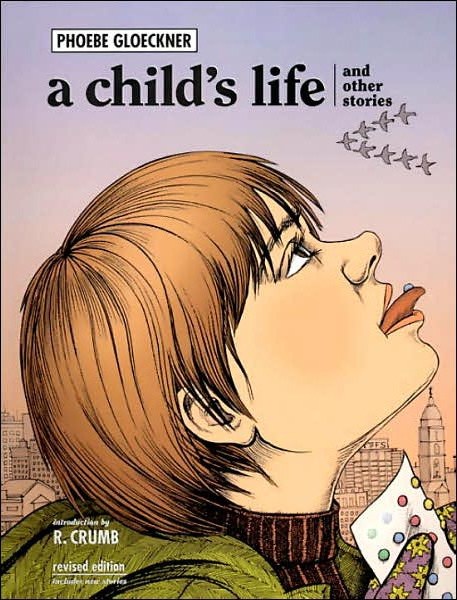
A Child's Life: Graphic Novel

A Child's Life
A Child's Life and Other Stories
Phoebe Gloeckner

This is one graphic novel that certainly lives up to its name. I'm glad I wasn't reading it in public when I turned the page and saw the panel depicting two young girls peeping in through a broken bathroom window and catching their stepfather in a *ahem* private moment. (Granted, there were far more disturbing scenes, but that was the first one that I recall being particularly explicit.)

I came across this title when I was looking for graphic novels written and illustrated by women. It seems like a lot of the well known books in this medium are by men, and if you've read my blog at all you probably know I like reading female authors. (And yes, I read male authors and yes I like them and yes Maus I & II are amazing).

The characters in A Child's Life and Other Stories are clearly based on Gloeckner's self and family and friends. It was a little odd to get used to at first, as she often changed the main character's name from story to story. It's understandable that she would want to put some distance between herself and some of these incredibly painful experiences. The stories are in rough chronological order, grouped as child years, to teen, to adult. They were not all completed at the same time, so there are very noticeable differences in drawing styles. This isn't a bad thing - in fact, the differences lend interesting visual variety.

This is not a book to willy-nilly recommend to your friends. It is intense. The subject matter is dark - excessive drug and alcohol abuse, pedophilia, rape, child abuse.

Unlike Maus, there is no attempt to depict the atrocities in anything other than minute detail. All the horrors are present for perusal, which can make you feel a bit like a creepy voyeur. What does this mean? What is the purpose of these artistic choices? Perhaps it's to force the readers' heads point at these acts, force them to watch and acknowledge they exist. Because unfortunately, there are too many children who know about them first hand.

Thursday, August 30, 2012

Quick Thoughts: Books You Need to Read

All three of these books earned 5 star ratings from this picky reader.

Alias Grace
Margaret Atwood

Let's start with the one I read back in January (eep!): Alias Grace. Margaret Atwood, one of my favorite living writers, fictionalizes the tale of Grace Marks, an Irish immigrant to Canada who is convicted of murdering her employer. I love Grace, the unreliable narrator, the "alienist" doctor intent on finding out the truth about her crime, and the Canadian frontier setting.

I wish I'd written my thoughts when the book was fresher in my mind, but it was not to be ;-) It was very good, that I clearly remember!

Anne Of Green Gables
Lucy Maud Montgomery


 I absolutely loved the Anne series when I was growing up. That Anne girl, with her endless, exhausting supply of energy, her determination to make the best of whatever life threw at her, her fiery red hair, worked her way into my heart. I'd been wanting to re-read Anne of Green Gables for some time, hoping it would provide a much-needed comfort read. Happily, it did not disappoint. Anne and the other characters were just as charming as they were fifteen years ago when I first met them. Montgomery's descriptions of Prince Edward Island have lodged themselves deep in my imagination, making me ever hopeful that I'll one day get to see the White Way of Delight for myself.


Brother, I'm Dying 
Edwidge Danticat

This is Danticat's story of her two fathers, who were also two brothers. As perhaps you would expect from a writer, there is a theme focusing on the importance of words running throughout this memoir. Her uncle depends on his words as an orator and preacher, then loses them completely when surgery removes his voicebox. He relies on compulsively jotted notes to detail the activities around him. Danticat listens to the stories of the elder women in the family and is taught about life, and about death. She struggles to find the words to communicate with her parents, who have left her and her brother in Haiti as they try to prepare a place in New York.

The end, of course, is heartbreaking. What else would you expect with a title like Brother, I'm Dying? There is hope though, and life, and beauty.

Okay, which one are you going to read first? 

Monday, August 20, 2012

The Hanging of Angelique

The Hanging of Angelique
The Hanging of Angelique: The Untold Story of Canadian Slavery and the Burning of Old Montreal
Afua Cooper
"Slavery is Canada's best-kept secret, locked within the national closet. And because it is a secret it is written out of official history. But slavery was an institutionalized practice for over two hundred years. ...Canada may not have been a slave society - that is, a society whose economy was based on slaves - but it was a society with slaves."
Canadian slavery was certainly something I knew nothing about prior to reading this book. I was always taught that Canada was the promised land for slaves in the US, especially after the Fugitive Slave Act. Afua Cooper's groundbreaking book dispels that myth.

She focuses her narrative on one young enslaved woman, christened Marie-Joseph Angelique, who was accused of setting her mistress's house on fire and, as a result, burning down much of Old Montreal. Cooper is sure to put Angelique's story in context, explaining how slavery was an integral part of Canada's foundations.

Cooper does not shy away from placing blame on Angelique. In fact, the idea that this was a purposeful act, borne of the frustrations and chafing of the slave system, is central to her thesis.
"Did Angelique set the fire? Your guess is as good as mine. No one saw her light the spark that started the blaze. All the evidence was circumstantial. But I believe she did set it."
When Angelique set the blaze, she acted willfully, deliberately. She was not a woman to sit idly by and quietly bear the harsh hand she was dealt. Throughout her life she rebelled, through acts large and small. Her final act of rebellion ended up even bigger than she had probably anticipated.

Want more like this? Try:
  • Sojourner Truth, The Narrative of Sojourner Truth. Another slave narrative from a woman with Dutch ties.
  • Assata Shakur, Assata. A 1987 autobiography from another resistor that clearly shows the struggle continues.
  • Margaret Atwood, Alias Grace. The fictional retelling of a famous Canadian murder case. In this case, the accused is servant girl Grace Marks.

Tuesday, August 14, 2012

The Dovekeepers

Book cover of The Dovekeepers, featuring a young Jewish girl wrapped in a white dress and headdress with two doves sitting on her shoulders
The Dovekeepers
Alice Hoffman

From the first, it's apparent that Alice Hoffman has spent time researching this book. She attempts to bring to life the time of Jewish resistance to Roman rule in the first century CE, culminating with the siege on Masada.

She focuses on the women in the community, handpicked by Shirah, the Witch of Moab, to tend the fortress's doves. Four of the women narrate sections of the novel. Unfortunately, they all sound the same. I love a book that successfully handles multiple narrators, but here it just doesn't work. A third person narration, with a focus on the four women in turn, probably would have been a better choice.

I did love how she presented a part of early(ish? I'm not a scholar) Judaism that has been pretty well covered up - and had all these rebellious women. I love a good rebellious woman character. Her presentation of the fortress of Masada was really interesting. I never realized it was a retreat for King Herod, and would thus have all the trappings royalty would have demanded. It was pretty cool to think about turning it into a stronghold for rebels.

On the whole, though, I didn't love the book. Much of it felt overwrought, and it dragged on and on. I mean, it's set in Masada. I know what's bound to happen, but I felt like I was reading 450 pages just to get to the action. Still, worth reading for the good parts.

Want more like this? Try:*
  • Stacy Schiff, Cleopatra, A Life. While focused on Cleopatra (duh) this book offers a different perspective on her contemporary, Herod, and his desert kingdom.
  • Geraldine Brooks, People of the Book. Judaism through time, as illustrated by the travels of an ancient manuscript.
  • Raphael Patai, The Hebrew Goddess. I haven't read this one yet, but I am excited to learn about this aspect of Judasim. I always thought it was a monotheistic religion from its beginning. 
*All book links are to the Indiebound affiliate program.  

Saturday, August 11, 2012

Weekend Cooking: Minding My Manners

Book
Emily Post on Entertaining
Elizabeth L. Post

I've had this book on my shelves for ages now, and have done little more than flip through it. I'd read the first chapter. "Party Planning" and decided it was so out of the realm of anything I could see my self doing that I put it down without a second thought.

But you know what? Despite the dreadfully stuffy bits, this could actually come in handy. Not that I plan on hosting a formal six course dinner party any time soon. However, it demystifies some of the impenetrable fog of secret Greenwich WASP code that surrounds these events.

It's also got good tips on how to manage logistics of say, a beach picnic. Or a buffet lunch. It has pointers on housewarming parties vs. open houses (who knew?).

Honestly, it was almost fun to imagine myself in some of the less probable circumstances: How do I treat the servants? (politely, but not with familiarity). Can I leave before the President of the United States does? (absolutely not). Must I used engraved invitations when I have a reception for my Senator? (ha!).

Anyway, give it a try, even if it's just to remember that your water glass is the one on the right.
Weekend Cooking, hosted by Beth Fish Reads, is a weekly blogging event open to anyone with a food related post to share. Do check out what this weekend's other participants are stirring up!

Saturday, August 4, 2012

Some Quick Thoughts

Every Last One
Anna Quindlen

At work, we have a book exchange box. I pulled this one out of it awhile ago, as I've been wanting to give Anna Quindlen another try. I read Blessings several years ago, and thought it was okay, but nothing special. However, I've read some short nonfiction from her and really like it a lot.

Well, I think I'll stick to her nonfiction. Every Last One was... fine. Tragic, which certainly appeals to me. But there was a distance between the reader and the Mary Beth, the narrator, a buffer, that meant that I never really felt a true connection with her. She has trouble connecting with the other people in her life, too.

There is a lovely piece near the beginning where Mary Beth describes the breathing patterns of each of her children. Their sounds while sleeping mirror their personalities while awake. I am fascinated by idea of what makes a person uniquely "them," even as they sleep.

So, not a bad book, but just not worth raving about.

Miral
Rula Jebreal
This is a book that could have been really good. Hind, a young, Arab woman in Jerusalem finds 55 orphaned or abandoned children, victims of the violence erupting in the city. She changes the course of her life to serve this children and the many more like them that are sure to appear. She leverages her considerable connections to keep them housed, fed, and as safe as possible.

The book is divided into parts, each part focusing on one of the female characters. Miral, of course, is one of them, a girl sent to Hind's orphanage and school after her mother dies. Her father is at a loss as to what do do with Miral and her younger sister. He trusts Hind to look after them and educate them, and he does his best to see them as often as possible.

Unfortunately, the tone never seemed to change, so all of the women just blended together for me. Further, just like in Every Last One, there was a distance between the characters and the reader. In fact, in the first chapter, I thought perhaps I was reading a journalist telling of an event that was going to set up the "real" action of the book. Nope. And then I realized the book was written by a journalist. I have  not had much luck with journalists who write novels.

Here's a thing I like about blogging: it forces me to think about why  a book didn't speak to me. Here are two decent books, ones I'm sure many people would like, but they weren't for me. And in writing about them, I realize that despite the vastly different settings, time period, etc, the problem I had with both of them was that I could not connect with the main characters. I don't have to like the main characters of the books I read, but I do have to get them.

What is a must for you when you read? Characters? Plot? Writing? Something else? Share in the comments.

Monday, July 30, 2012

The Mill on the Floss: A Victorian Celebration

Hosted by Allie at A Literary Odyssey
The Mill on the Floss
George Eliot

Wow. For awhile there I was afraid I wasn't going to finish a single Victorian novel before the end of A Victorian Celebration. Saturday I buckled down and knocked out the last 100 pages of The Mill on the Floss.

The Tulliver family owns the titular mill on the Floss, a river running along the fictional town of St. Ogg's, England. Mr. Tulliver is prone to either bad luck or poor decision making, depending on who one would ask. Of course, this leads to the downfall of his family and the loss of the mill. It is up to his son Tom to restore the family honor and position.

Did this live up to the perfection of Middlemarch? Not quite. I found the beginning difficult to trudge through. As children, Maggie and Tom Tulliver were quite unbearable. It was only after they grew into adolescents that I could read about them for more than twenty pages at a time. Even then, Tom was such a bore. I did feel badly for him, as he was under tremendous pressure, but still - what a jerk!

My heart broke for Maggie. Not the child Maggie, but the young woman. While her brother could work hard and bring honor to the family, the most she could hope for was to not be a burden. This exchange, during an argument between the siblings, laid out the central conflict so directly:
"Because you are a man, Tom, and have power, and can do something in the world."
"Then, if you can do nothing, submit to those who can."*
Maggie's choices, and those of any young woman of that time, were severely limited. She tries to do what is right, but she cannot help choosing what she feels is right in her heart instead of what Society would insist upon. There is a brilliant chapter quite late in the book where Eliot has Society weigh in on Maggie's options.

As I read, I wondered how much of this book was autobiographical. I have read that it was based in part on George Eliot's childhood, but how much was adult Maggie like George (or Mary Anne)? Eliot had a rather unusual relationship status of a woman of her time and status. I always thought of her as a trailblazer, but reading Maggie's struggles and heartbreak made me wonder how Eliot really felt about her love life. I usually hesitate to find too many parallels between an author's life and their work, but it's difficult to refrain from doing so in this case. Sorry if this is a bit obscure - I just don't want to give away too much for those who haven't read this yet!

I'm glad that I still have more of Eliot's work to read (and probably reread). The next one I tackle will probably be Daniel Deronda.

Do you have a favorite Eliot novel? Which one?

*Of course, we see that even Tom's power has its limits in the end.

Thursday, July 26, 2012

Unbearable Lightness

Unbearable Lightness
Unbearable Lightness: A Story of Loss and Gain
Portia de Rossi

Here's the thing. I kinda liked this book. No, the writing isn't going to win any awards. Still, three stars. But while writing this review, I seemed to focus more on the negative. I don't want to give the wrong impression, so I'm putting this upfront :-)

You may recognize Portia de Rossi from Ally McBeal or Arrested Development or some other show, or from being married to Ellen Degeneres. I always thought she was incredibly beautiful and poised. In Unbearable Lightness, she lets the public into her very private, very scary struggle with an eating disorder and her dehabilitating self doubt. She is revealed as that girl that may come across cool and standoffish, but it's really because she's terrified that if people see her true self that her reputation and career will be destroyed.

As this is a book about a woman with an eating disorder, there are some very graphic passages. I felt physically ill at certain points, imagining the suffering that de Rossi was going through, denying her body the fuel it needed to exist.

It is so shocking to realize how far we've come in a relatively short time when it comes to LGBTQ acceptance. Of course, there is still a long way to go. De Rossi is very matter of fact about her career being stopped before it really would have started should anyone have found out she was gay. I am sure this still happens, probably pretty often, but it does seem like less of a big deal when a star comes out. Of course, there's a big difference between coming out on your own terms after building a successful career and being forcefully outed as a young Hollywood hopeful. Maybe that's changing?

The most powerful part of the book is when she juxtaposes her health diagnosis with pictures of herself when she was at her most sick. And truly, in most of them, she looks like any typical starlet. It's a shock to realize how many people must be starving themselves like she was.

I do wish there had been more focus on the "gain" part of the subtitle. De Rossi rather glosses over her struggle to recovery, and the stability and happiness she's found. It's clear there was a struggle, but it's only hinted at. She was so forthright in sharing her experience in the depths of her condition, I was surprised that she didn't detail how she got better. I feel it would have been a better aid to those that she says she wants to help. It was a bit simplistic - I found out I was sick, so I got better. I had an eating disorder because I was afraid of not being accepted as gay. I don't know - it just was a bit too pat.

Additionally, there were things in the "recovery" section that made me uncomfortable. She makes some rather judgmental pronouncements on eating habits in general, and she still seems to think that there is an acceptable weight range, or an acceptable way for weight to be distributed on one's body. There's a comment about people on treadmills vs. people who are "naturally" active, focusing on doing things like walking their dogs. While it seems that she's made progress, there are still some pretty damaging. For some thoughts bout what it's truly like to accept bodies, including fat bodies, I recommend checking out the Shapely Prose archives or Shakesville's Fatsronauts series. Also, for a great (and quick) summary about how not to talk about food and bodies around people with eating disorders, check out this post from a human story. It would be awesome to eliminate discussions about "good" and "bad" foods - you never know who's around to be hurt by these well accepted, seemingly harmless words.

Want more like this? Try:
  • Marya Hornbacher, Wasted: A Memoir of Anorexia and Bulimia. A non-celebrity take on the topic. Very interesting to see the similarities and the differences in how the eating disorders were manifested in the two women. 
  • Naomi Wolf, The Beauty Myth. I haven't read this one yet, but I do have a copy (thanks to the lovely Marilyn). De Rossi mentions this book frequently as opening her eyes to the impossible standards of beauty that women are expected to meet. Warning: Although this book is supposedly excellent, Naomi Wolf has been advancing more troublesome ideas in recent years.
  • Jessica Yee, Feminism, for REAL. To further the idea of accepting ourselves and those around us, regardless of appearance or anything else! This book is awesome, btw. Everyone should read it.

Tuesday, July 24, 2012

Ceremony

Ceremony
Ceremony
Leslie Marmon Silko

Ceremony, roughly, is the story of Tayo, a former WWII soldier of mixed white and Laguna ancestry, trying to readjust to civilian life. Like many of the other former soldiers, he turns to alcohol to drown his troubles. Compounding the stresses of returning from war is the fact that he's never fully fit in at home to begin with. His mother is the black sheep of the family, having produced living evidence of sleeping with a white man.

His grandmother feels a native healer may be able to save Tayo, but some in the family think Tayo is unworthy to receive such help because of his mixed bloodlines. Eventually, Tayo does meet up with Betonie, a healer, also of mixed ancestry. Betonie leads Tayo through a series of ceremonies intended to cure his depression and lift the effects of the war.

This is not the easiest book to read. Past and present blend, reality and imaginings blend together in ways that reflect Tayo's fractured thinking. As he pushes forward, attempting to find relief, you begin to see life itself as a ceremony, to be improvised and adapted as needed. Ceremony rewards you with remarkably beautiful, vivid passages such as this:
He found flowers that had no bees, and gathered yellow pollen gently with a small blue feather from Josiah's pouch; he imitated the gentleness of the bees as they brushed their sticky-haired feet and bellies softly against the flowers.
I am so glad that I finally read this book. I've heard about it as one of the classics of Native American writing, and it certainly deserves that recognition.

Want more like this? Try:
  • Toni Morrison, Sula. A black soldier returns from World War I to his small hometown in Ohio. His method of coping is alternatively spooky, humorous, and tragic.
  • Heinrich Böll, Billiards at Half-Past Nine. A German family deals with their role in World War II.
  • Ernest Hemingway, Across the River and into the Trees. Most Hemingway books deal with war or its aftermath in some way, but this one is memorable for Colonel Cantwell's intense struggle to reclaim life and happiness even as he knows he is facing imminent death.

Saturday, May 26, 2012

Pin It, Do It: Cheddar Pecan Crisps

I've been wanting to join the Weekend Cooking fun, hosted by Beth Fish Reads, for a while now, but never had anything that fit the theme. Thanks to this edition of the Pin It, Do It Challenge, I do! Go check out this week's other Weekend Cooking participants here.

So.

I had high hopes of writing about a delicious cocktail, named after serious drinker Ernest Hemingway. I figured if he drank a bunch of them, they had to be pretty decent. Unfortunately, the Hemingway Daiquiri calls for maraschino liquor, which is proving nearly impossible to find. My local liquor store said they'd order some, but when I called back to see if it had come in, they told me they were unable to find any. I tried ordering it online, but I can't find anyone that will ship it to me.

When I find the elusive ingredient - and I WILL - I'll be sure to let you know. I hope they're good, because otherwise I'll be using the stuff to make homemade maraschino cherries, which actually do look pretty lovely.

Instead, I've made Cheddar-Pecan Crisps (pin here). Last year, I read A Tiger in the Kitchen by Cheryl Lu-Lien Tan. I was impressed by her willingness to put in the work and learn how to cook some of her favorite foods. Ever since, I've been wanting to try some of her recipes. These crisps aren't her creation, but she wrote about them on her blog, which is still actively chronicling her journey with food.

Crisp batter, photo by me.
As I'm writing this, the first batch of crisps is bubbling in the oven. They smell like HEAVEN.

The details of the recipe are a bit
lacking - it looks like maybe they were cut off. I've put them in a 350 degree oven and set the timer at 20 minutes. That seems to be working.

The batter is very thick - I ended up mixing it with my hands, as my poor little electric mixer just wasn't cutting it. Ahh, to dream of a kitchen with counters and storage and a Kitchen Aid stand mixer. Someday.

My crisps didn't come out exactly like the picture. Here's the first batch, fresh out of the oven:
Crisps, again, photo by me.
 I am curious to so if I could track down the complete recipe somewhere. Maybe I was missing a step, or not doing something completely right. Also, they aren't nearly as cheesy as I expected, especially based on how they smelled when they were baking. They taste like savory tea biscuits. Good, but nothing I'd probably make again.

Lu-Lien Tan does have other recipes I want to try. Her family recipe pineapple tarts sound amazing, and served as the inspiration for her cooking project. The recipe makes A TON of tarts, though, so maybe I should wait until I've got the above-mentioned counter space :-)

If you could make a recipe based on a literary inspiration, what would it be? Or maybe you have already - tell me about it!

Wednesday, May 23, 2012

The Rover: A Classic Play

Oroonoko, The Rover
and Other Works
The Rover
Aphra Behn

Aphra Behn was quite the interesting individual. She was a spy for the Charles II, but when he wouldn't pay her, she turned to writing to make a living. One of her best known works is the play The Rover. The play is set in Carnival time in  Naples, Italy, in the mid 1600's.

The plot is pretty simple. Guys and gals were masks, there's flirtation and confusion, and perhaps some falling in love. Simple, see?

I chose to read The Rover for the 2012 Back to the Classics Challenge for the "Classic Play" category. I'm really glad for the push to read this, as I'm not someone who reads a lot of dramatic works. I think the key to my enjoyment here was that I just read slowly and tried to "see" the play being acted out in my mind's eye.

I say "enjoyment" because I did enjoy this, but I'm not raving over it. Here are some pros and cons (minor spoilers ahead):

The Stuff I Didn't Like So Much:

Rape-y dudes:
"I begin to suspect something; and 'twould anger us vilely to be trussed up for a rape upon a maid of quality, when we only believe we ruffle a harlot." 
Eww. Especially when they're "rewarded" in the end. Yes, I know the attitudes are largely a reflection of the times. I don't care.

I wish there was a bit more going on than just a bunch of people running around in masks, getting confused about who everyone else was and trying to sleep with one another. This is probably an unfair criticism, because for what it was it was a fun read. The silly plot does make it approachable, even when it is difficult to keep all the characters straight.

The Stuff I Liked:

It opens with women alone on stage! And one of them, supposedly destined to spend the rest of her life in a nunnery, is wanting to find someone to get it on with (did I mention I like rebellious women?)

It's funny! Even though this is an old play, it's easy to pick up on the witty dialogue.

Want more like this? Try:
  • A Midsummer Night's Dream, William Shakespeare. It's got that "magical" quality, the idea that women's choices are limited to a suitable marriage or life as a nun.
  • People of the Book, Geraldine Brooks. One of the sections deals with Venice in the 1600s, during Carnival time. Very cool picture of that time and place.
  • The Importance of Being Ernest, Oscar Wilde. Another fun, funny, approachable play that everyone should read. 

Thursday, May 17, 2012

Second Selection from a Year of Feminist Classics

The Book of the City of Ladies
Christine de Pizan

I know I'm posting my thoughts on this book well after the other Year of Feminist Classics readers. I really struggled to finish this, and have further struggled with writing up a review of it.

No doubt, this is an important text. It's certainly "pro-woman" in the sense that de Pizan is defending women from pretty vile attacks by other writers. However, I'm thankful that feminism has come a long way since the 1400s.

For example, there's a heavy emphasis on virginity and equating "virtue" with virginity. At the same time, there is an implicit recognition that young people, regardless of gender, are typically sexual beings. See the following passage:

"This lady (Minerva) was not only extraordinarily intelligent but also supremely chaste, remaining a virgin all her life. It was because of her exemplary chastity that the poets claimed in their fables that she struggled long and hard with Vulcan, the god of fire, but finally overcame and defeated him. This story can be interpreted to mean that she conquered the passions and desires of the flesh which so vigorously assail the body when one is young."

There were times when her arguments sounded depressingly familiar:

"Yet there are still those men who go around claiming that women know nothing of any worth. It's also a common way to mock someone for saying something foolish by telling them they're thinking like a woman."
Poster from 2012 movie Think Like a Man

How much has society really progressed when in 2012 we have a movie based on Steve Harvey's book Act Like a Lady, Think Like a Man?

Why is "woman" still a slur? Why are women still considered less-than? It's disheartening at times to really think about these issues.

While The Book of the City of Ladies may be interested in dismantling gender based privilege (although that's certainly debatable), it is very interested in propping up other systems of oppression, such as heterosexism, classism, racism, Christian privilege, gender essentialism - you get the idea. Only certain women should get the benefit of the doubt, should be considered as fully human as their male counterparts.

The last portion of the book was particularly difficult to complete. It's basically a list of a bunch of early female Christian martyrs who died horrifically. Far from serving as example of how to live my life as a proper woman, it made me thankful that my family left Catholicism shortly after I was born, so these stories didn't give me nightmares when I was a young child!

At the end of the day, I'm glad I read this. It's probably the oldest book I've ever read in it's entirety, so that's something :-) Just not exactly a "fun" read.

Sunday, May 13, 2012

Sunday Salon: Rainy Day Reading

This weekend was supposed to be really nice, but instead, there are storm cells on the horizon, threatening rain on and off. My sister in law and her family came over to go to the beach and then do a bit of grilling, but the drizzling has sent me inside. I got in about 10 minutes of reading The Rover, by Aphra Behn, before it got too wet and I had to limp (I've got a sprained ankle) to cover to protect the book (& yes, myself). My little nephew was teasing me, saying "What? Are you scared of water? All rain is is water!"

He's still out there with the rest of them who aren't scared of a little water falling from the sky. There's no lightening to be seen, so they'll probably play around for a little bit and see if the weather clears up.

Meanwhile, I'm back inside, on the couch, drink in hand, ice pack on ankle, ready to dive back into The Rover. It's my pick for the Play category of the Back to the Classics Challenge. I'm a bit behind on this challenge. I've read two books, but have only reviewed one. There are nine categories, so I'll have 6 to go after my current read. I should be able to finish it pretty quickly, as it's not that long. With my sprained ankle, I'll have an excuse to lay around and read a bit without the hubby giving me too much grief. Silver linings!

Oh - I've been meaning to publicly thank the lovely Marilyn at Me, You, and Books, for graciously sending me some interesting additions to my bookshelves:

No would would guess I'm interested in feminism, right?

I've been wanting to read The Beauty Myth for a long time, even though I think Naomi Wolf's politics have strayed from her previous feminist roots. See here and here for some examples.

The other titles, for those who can't read them in the picture, are The Tyranny of the Majority, Lani Guinier; What is Feminism, Edited by Juliet Mitchell and Ann Oakley; and Feminism and Science, by Evelyn Fox Keller and Helen E. Longino. I'm tentatively planning a women and science reading event for later this year, so the last book will certainly come in handy for that.

Thank you, Marilyn!

How is your Sunday going?

Wednesday, May 9, 2012

Mastiff

Mastiff, Tamora Pierce
Mastiff
Beka Cooper, Book Three
Tamora Pierce

Mastiff forms the conclusion of the Beka Cooper series, set in Tamora Pierce's Tortall universe.

In Mastiff, Beka, along with her human partner, Mattes Tunstall, her scent hound Achoo, and her feline/constellation companion Pounce, are sent on a top secret mission on which the fate of the kingdom hangs. They team up with some new characters as well as old friends, including lady knight Sabine of Macayhill. The possibility that anyone is a traitor looms heavily over the group. This is the mission that proves Beka is a full-blown Dog, far from her young Puppy days, and able to take on whatever challenge awaits her.

The social justice themes in Mastiff are more prominent than they were in the first two Beka Cooper books. Beka tackles slavery and classism head on. She also struggles with the reality that her job means turning people over to the government to face capital punishment, making her feel like the murderers she's trained to take down. Sexism and gender essentialism continue to flourish through the Goddess Mother cult. Lady Sabine reveals that she's faced violent opposition along her journey to become a well-respected female knight.

Mastiff  is the perfect conclusion to a great trilogy, and an end to this era in Tortall.

Monday, April 30, 2012

Continuing with Aya

Aya, staged for
the mini-challenge
Aya of Yop City
By Marguerite Abouet
Illustrated by Clément Oubrerie

Aya of Yop City is the second in a series of graphic novels by Ivorian born writer Marguerite Abouet. There are six novels published in French, but only three have been released so far in English. The fourth is set to come out this summer (if anyone knows of a way to get a review copy to this blogger, she'd be eternally grateful, *hint, hint*). I read the first one, Aya, last year and loved it.

I was happy to find that my library had the second book. It picks up right where Aya left off, and it was fun to fall right back in with the delightful cast of characters populating 1970s Ivory Coast. Aya and her friends all have their own worries, but they are there to lend a hand when one of them needs something, be it babysitting or boyfriend advice.

This time around, it's not just Bintou who needs help. The girls' parents are in for some big surprises, too. Unfortunately, the book ends rather abruptly, on a big reveal that is sure to have major consequences in the third volume, Aya: The Secrets Come Out.

I read this during the April edition of Dewey's 24 Hour Readathon. I also used it as inspiration for a book-staging mini challenge hosted by Midnight Book Girl. I chose to surround the book with a bold patterned scarf, since the women in the book are find of them, stick a picture of my cute nephew in to represent the baby, and add a bright lipgloss for the town beauty contest.

Friday, April 20, 2012

Wolf-Speaker

Wolf-Speaker
The Immortals, Book 2
Tamora Pierce

Yay - I finished a book! On Sunday I posted about my current slump. I'm cautiously hopeful that it will soon be behind me after tearing through this quick novel on Wednesday afternoon.

Wolf-Speaker is the second book in Tamora Pierce's Immortals series. I read the first one, Wild Magic, back in January (back when I was actually reading books). I really enjoyed Wild Magic, and was taken with Daine's journey of self discovery.

In the second book, Daine is on her own, without a human mentor, for most of the book. Of course, she's not totally alone. She's helping her old wolf pack with a new problem - humans invading and destroying their territory. But it's not just the animals that these invaders are threatening. The kingdom of Tortall and King Jonathan are also at risk.

For whatever reason, I didn't like this book as much as I did Book 1. There seemed to be a big jump in Daine's maturity between the two books. In the first, she needs a lot of hand holding by her older mentors. Yes, she is a strong, independent character, but she's still a pretty young girl. In Wolf-Speaker, her teacher leaves her behind in dangerous territory with nary a word. I  understand it was a decision that had to be made quickly, and Daine insisted on staying with her wolf pack. Still, it felt a bit forced.

I do like how the animals refer to them selves as the People. Humans are, well, humans. Not People. The People have a respect for the ecosystem and inter-species relationships that humans lack.

Despite my lack of overwhelming enthusiasm, I still checked Book 3, Emperor Mage, out from the library in preparation for this weekend's read-a-thon. Maybe I should go get the last one, too, just in case...

Friday, March 30, 2012

Feminists, Read this, FOR REAL

Feminism FOR REAL
Feminism FOR REAL
Deconstructing the Academic Industrial Complex of Feminism
Edited by Jessica Yee

This book is SO GOOD. SO GOOD.

The only thing that kept me from giving it five stars was that, as with pretty much any anthology or short story collection, some of the pieces in Feminism for Real are stronger than others. (Maybe I should have given it five stars, but my ratings are typically a gut reaction and once I make them I don't really like to go back and change them). There were no real duds, just some selections that didn't speak to me so much, but overall the collection did what it said towards "deconstructing the academic industrial complex of feminism." This book is what I was hoping for from bell hooks' "Feminism for Everybody." The writers are a diverse group of people, mainly Indigenous and/or Canadian. They talk about how ivory tower feminism has failed them, and how they work anti-oppression principles into their everyday lives and activism.

Editor Jessica Yee's interview with anna Saini on sex work and feminism was one of the best pieces in the collection. Admittedly, it contained many ideas that I'd read elsewhere, but they bear repeating, especially since Saini's perspective is not one that gets much mainstream coverage. Here's an excerpt:
i agree that the missionary slant that feminist "saviors" of sex workers adopt is a modern form of colonialism. Sex workers are the contemporary Venus Hottentot for all the fascination that white feminists have with fetishizing our work.... If they really wanted to help, they would work to correct the racist, capitalistic, abelist and patriarchal power structures that force too many women into sex work, but because they have a stake in these structures they are willfully ignorant to this perspective. 
And I love this:
i don't think anyone is defined by what work they do for pay. In an ideal world, "job" is synonymous with "passion". i can envision this world in my art and the work in those in my communities, but in the mean time we need to respect the rights of people to identify with what they love rather than how they survive financially. We need to see beyond the confines that white, capitalist, patriarchy place on our humanity.
This is so, so, spot on. Identifying people with the work they do is inherently a classist paradigm that erases the reality of so many people. It also places a premium on a person's ability to work at all. So many people cannot enter the workforce, despite wanting and/or needing to, because they are physically or mentally disabled in some way. Is someone who can't work less than fully human? Surely not.

Okay, I could go on and on and on about all the pieces I really liked, but this review is already being posted so much later than I wanted, so this is what you get. But read it. Seriously. Maybe I'll post a review "part II" at a later point.

Want more like this? Try: