Tuesday, October 18, 2011

Japanese Picture Brides

The Buddha in the Attic

The Buddha in the Attic
Julie Otsuka

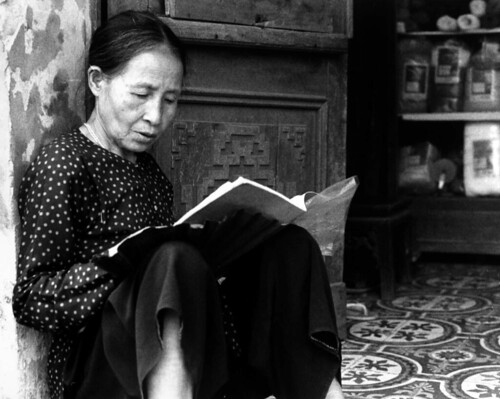
During my cover spying at the airport last week I saw a woman reading Julie Otsuka’s The Buddha in the Attic. This reminded me that I still hadn’t finished writing my review, even though I finished the book back in the beginning of September. Yeah, I’m kinda behind on reviews. Oops. Anyways, here goes:

Oksuka’s first novel dealt with the internment of Japanese and Japanese Americans during World War II. The internment also figures heavily in her second book, The Buddha in the Attic, which follows a group of Japanese picture brides as they leave Japan, travel across the Pacific Ocean to America, and adjust to life in their new country.

There is no main character in this book. I kept waiting for one to emerge, to hear one voice rise above the others, so I would have one story to follow. Instead, each of the women speak in turn, in the same paragraph. The intent must have been to attempt to show the multiplicity of experiences, and how each woman dealt with the same basic circumstances. Unfortunately, the book often read like a laundry list. Every now and then there would be a paragraph or so devoted to one story, or I’d recognize where one story picked back up after dropping off thirty pages earlier.

A couple snippets that work:

On throwing themselves into work:
We put away out mirrors. We stopped combing our hair. We forgot about makeup. Whenever I powder my nose it just looks like frost on a mountain.

On the desires of their teenage children:
One wanted her own room, with a lock on the door. Anyone who came in would have to knock first.

There are some misses, where Otsuka gets heavy handed. Take, for example, what happens when people start being taken away by the authorities, those that remain wonder who is reporting them, and why:
One of our customers at the Capitol Laundry, perhaps, to whom we had once been unnecessarily curt? (Was, then, all our fault?)
The parenthetical is not needed. The question is clearly expressed in the people’s worries. This may seem nit-picky, but this is a slim little novel, and from what I’ve read, Otsuka labors intensely over each word, and it takes her a long time to write a book. My expectations are higher than they might otherwise be.

One of the most powerful sections of the books dealt with how the townspeople deal with their fellow citizens being taken by the US Government. At first, they worry about their neighbors. No one knows where they’ve gone, no one knows when, if ever, they’ll be back. But rather quickly, the townspeople move on, attending 
“a lecture at the annual Pilgrim Mothers’ Club luncheon by recent Nazi refugee Dr. Raoul Aschendorff, entitled “Hitler: Today’s Napoleon?” which draws a standing-room-only crowd,”
never realizing the parallels to the Japanese in America.

Thursday, October 13, 2011

Cover Spying at the Airport.

I'm on my way to the National Lawyers Guild Convention, where not much reading or blogging will happen. That's fine, though, because the panels look amazing, and I'll be meeting up with some great friends.

In the meantime, I'm stuck on the plane. On the tarmac. Engines off.

Fortunately, I'm nosy, so I will fill up in on what books my fellow passengers are reading. Without further ado:

Man, 50s, suit, American flag pin. Finger Lickin' Fifteen, Janet Evanovich.

Woman, 50s, blonde curls & glasses. When God Whispers Your Name, Max Lucado.

Woman, short blonde hair, early 20s, Chemerinsky's Constitutional Law supplement. Joining me at Convention?

Male, early 20s, with friend, holding Dan Brown's The Da Vinci Code in paperback.

Woman, dark curly hair, glasses, 50s. A Buddha in the Attic, Julie Otsuka.

Male, 30s, body builder type. The Ask, Laura Fredricks.

My choices, David Grossman's To The End of the Land, an the November issue of Runner's World, are pictured.

Wednesday, October 12, 2011

Culturomics

What the heck is culturomics? Don't worry, my Blogger spellchecker is asking me the same thing. According to Jean-Baptiste Michel and Erez Lieberman Aiden, "It's the application of massive-scale data collection analysis to the study of human culture." I was browsing the TED.com talks (seriously one of my favorite things to do) when I stumbled upon a talk called "What We Learned from 5 Million Books." Here's the video:

There's a transcript over at the website, which I'm not going to copy here because it's really long.

Okay, y'all back? Good.

Interesting stuff, right? Duh, it's books. Lots and lots of books. This gal loves books.

That was the first thing that struck me, and why I clicked on the talk to watch it.

But the second thing that struck me?
By Hotpix UK Tony Smith

Where are the women?

For the record, not that it will matter to anyone who has an issue with this post, I do not think that there is anything inherently wrong with an all-male project.

I do think that it's important to question why something is completely male, and what effect that might have on the outcome.

I also realize that I am making assumptions about the gender of some of those involved in the project. To me, they present as male, so I will refer to them as such. /End disclaimer.

So two guys give a talk. They worked with a team of people from all over to put together this very cool Google Ngram thingymbober that purports to track cultural changes by seeing how often certain words and phrases are used in books through the years.

It sounds like they had a bunch of people working on it. All of them were men.

Okay, that's probably not true. But you certainly wouldn't know it from the talk. Every person they mentioned was male.

The examples in the presentation? All men. You doubt me?

"Where do books come from?" chart: 3 clearly male heads, one probably male (or at least not distinctly female) head. @2:11
Thrive v. Throve debate: Steve & Thomas Jefferson. @5:07
Famous Author: Mark Twain @8:43
Censorship example: Marc Chagall @9:22

As the so-often-brilliant Melissa McEwan said just the other day, "Passively failing to seek out women's perspectives is a misogynist act."

It's enough to make you think that the analysis of human culture is really an analysis of man's culture. Woman, again, is simply a derivation from the norm.

How would this project change if women were visibly involved? Would the results change? Would the team have excluded and included different data points?

What does it say that even on a project tied so closely to the written word, where supposedly women are doing all the reading, that men become the face of the project? Where are today's Ada Lovelaces?

Again, the point of this post is not to criticize the project, or the people involved. It is just to point out the lack of visible STEM women, and raise questions about how that void might affect the work that gets done.

Monday, October 10, 2011

Books Without Words

Sequence I, James Siena
Hi, my name is MJ. I like books. I like art. I graduated from UCF back in... some year. I don't want to think about how long I've been out of undergrad.

Anyways, this post is a shout out to my alma mater, which started Flying Horse Editions, a fine art research facility and non-profit publisher of (among other things) artist books. Maybe they want to employ a law grad who doesn't really know anything about art law? I'm sure I could learn!

I was on the UCF website when I saw this beautiful art book, Sequence I, by James Siena. If you go to the website, you can watch a short video of the whole book laid out. It won't let me embed it here - boo. Apparently I'm not the only one taken with Siena's book - the Museum of Modern Art just bought a hand painted copy.
A James Siena print
So, do art books count as "books," or are they just art? In this case, the medium seems inextricably linked to the project, so much that they are inseparable. Thoughts?


Friday, October 7, 2011

Ada Lovelace Day

This is a day to celebrate women in STEM (Science, Technology, Engineering, Mathematics) fields. So…why am I covering this on a book blog?

1) I am a feminist.
2) It’s a BLOG. It relies on technology. Ada Lovelace is considered to be the first computer programmer, way back when she was working in 1842. I have a feeling she’d be pretty amazed at how we use computers today.
3) I like science books.  A good science writer helps explain to the lay person complicated ideas about the world around them.
4) There seems to be an artificial divide between those who like reading and those who like science. Those areas are not separate spheres. They are complementary.
5) I'm currently reading The Immortal Life of Henrietta Lacks by Rebecca Skloot. It is so, so interesting. If you haven't heard of it, you've probably been living under a rock for the past two years. If you haven't read it yet, buy it from your local indie shop (I will earn like, a penny, if you buy it through this link):

I only found out about Ada Lovelace Day about a week ago. I'm thinking of hosting some kind of blogging event for it next year. To help get me started with some ideas and recommendations, why don't you go ahead and answer one of these questions:

Do you have any favorite STEM women you'd like to recognize? What science book (especially by a female author) would you recommend? 

Wednesday, October 5, 2011

September in Review

No more piles of books for me
Well, September was a very trying month. My reading certainly reflects my scattered state of mind. I only completed 6 books, which is well below the 14 I read in August and the 11 I managed in July. I think that I'll be reading less for awhile. I realized that the majority of my reading time had been during my 45 minute one way subway commute. Now that I'm not living in good ol' NYC, I actually have to drive to work. I'm currently trying an audiobook, but I only listen to that when I'm alone in the car. I'm having trouble getting into it, though. It's only the second audiobook I've ever listened to. I don't know if audiobooks just aren't for me, if they're an aquired taste, or if I simply haven't found the right book.

I am happy to report that I was very pleased with the quality of my September reads. I had three 4-star reviews, two 5-star reviews, and one 3-star. I also read the best book of the year (so far) - A Happy Man by Hansjörg Schertenleib. Go find a copy.

My September reading breakdown:
6 books total
5 fiction                      83%
1 nonfiction               17%
3 female authors       50%
1 work in translation 17%

Sunday, October 2, 2011

Elvis in Nigeria

GraceLand, Chris Abani

GraceLand
Chris Abani

A while ago I posted about the Nigerian Literature Challenge in celebration of Nigerian Independence Day (October 1). I chose to participate by reading a novel by Chris Abani, an author born in Nigeria, but now living in the United States.

GraceLand is the coming of age tale of a young Nigerian man named Elvis. He spent the early part of his life in a rural area of Nigeria, living with his extended family. After his mother died of cancer, and his father suffered a crushing political defeat, the two of them moved to the slums of Lagos.

Elvis has a strained relationship with his father, he’s dropped out of school, his best friend may be big trouble. His dream of being a dancer and Elvis impersonator isn’t working out. He tries to maintain a connection to his mother through the journal she left behind, but it is not helping to guide him.

It is all he can do to survive poverty, violence, and government oppression. TW: LOTS of violence here, both physical and sexual (not that they’re mutually exclusive). The book ends with some hope for Elvis, although his path is far from clear.

I am glad that I heard about this challenge and discovered a new author. I will be reading more Abani in the future.

Oooh: A little late for Banned Books Week, but I just saw that GraceLand was removed from reading lists in Florida last year.